One-year-olds are driven to walk, talk, and explore independently. The best Montessori toys for this age include push walkers, shape sorters, stacking and nesting toys, simple puzzles, musical instruments, and practical life materials. Focus on open-ended wooden toys that let toddlers practice emerging skills at their own pace.
Your one-year-old is changing fast. One week they are cruising along furniture, the next they are taking wobbly independent steps. They are picking up tiny crumbs with a pincer grasp, babbling in what sounds like their own language, and pointing at everything that catches their eye.
This is one of the most explosive periods of human development, and the toys you choose matter more than you might think. The right Montessori toys meet your toddler exactly where they are, giving them just enough challenge to grow without frustration.
In this guide, we cover the developmental milestones happening between 12 and 24 months, the best toy categories for each skill area, specific product recommendations, and practical tips for setting up a Montessori-inspired play space at home.
If you are new to the Montessori approach, start with our guide on what Montessori toys actually are and how they differ from conventional toys.
Developmental Milestones: What Happens Between 12 and 24 Months
Understanding what your child is working on developmentally helps you choose toys that actually serve a purpose. According to the American Academy of Pediatrics (AAP) and the CDC milestone tracker, one-year-olds are developing across four major areas simultaneously.
| Developmental Area | 12-18 Months | 18-24 Months |
|---|---|---|
| Gross Motor | Pulling to stand, cruising, first steps, climbing | Walking confidently, running, kicking a ball, climbing stairs |
| Fine Motor | Pincer grasp, banging objects, stacking 2-3 blocks | Turning pages, stacking 4-6 blocks, scribbling, using a spoon |
| Language | First words (1-5), pointing, following simple commands | 50+ words, two-word phrases, naming objects in pictures |
| Cognitive | Object permanence, cause and effect, simple problem-solving | Sorting by shape/color, pretend play begins, matching objects |
Maria Montessori called this period the “absorbent mind” phase. Your toddler is not just playing; they are constructing their intelligence through every interaction with their environment. The toys that support this process share common traits: they are simple, purposeful, made from natural materials, and they let the child lead.
Parent tip: Watch before you buy. Spend a few days observing what your toddler is drawn to. Are they constantly trying to stack things? Obsessed with opening and closing containers? Fascinated by sounds? Their interests tell you exactly which toys to introduce next.
Top Montessori Toy Categories for 1 Year Olds
Not all toys are created equal. Here are the categories that align with Montessori principles and the developmental needs of 12-24 month olds, ranked by how universally useful they are.
| Category | Primary Skills | Best Age Range | Budget Range |
|---|---|---|---|
| Stacking and Nesting Toys | Fine motor, spatial awareness, size sequencing | 10-18 months | $10-25 |
| Push Walkers | Gross motor, balance, confidence | 10-16 months | $30-80 |
| Shape Sorters | Problem-solving, shape recognition, hand-eye coordination | 12-24 months | $15-35 |
| Simple Puzzles | Cognitive development, pincer grasp, vocabulary | 12-20 months | $10-20 |
| Musical Instruments | Auditory development, rhythm, cause and effect | 10-24 months | $10-30 |
| Ball Drops and Object Permanence Boxes | Object permanence, cause and effect, focus | 10-16 months | $15-35 |
| Practical Life Materials | Independence, coordination, concentration | 12-24 months | $10-40 |
| Wooden Blocks | Spatial reasoning, creativity, motor planning | 12-24 months+ | $15-40 |
Best Stacking and Nesting Toys
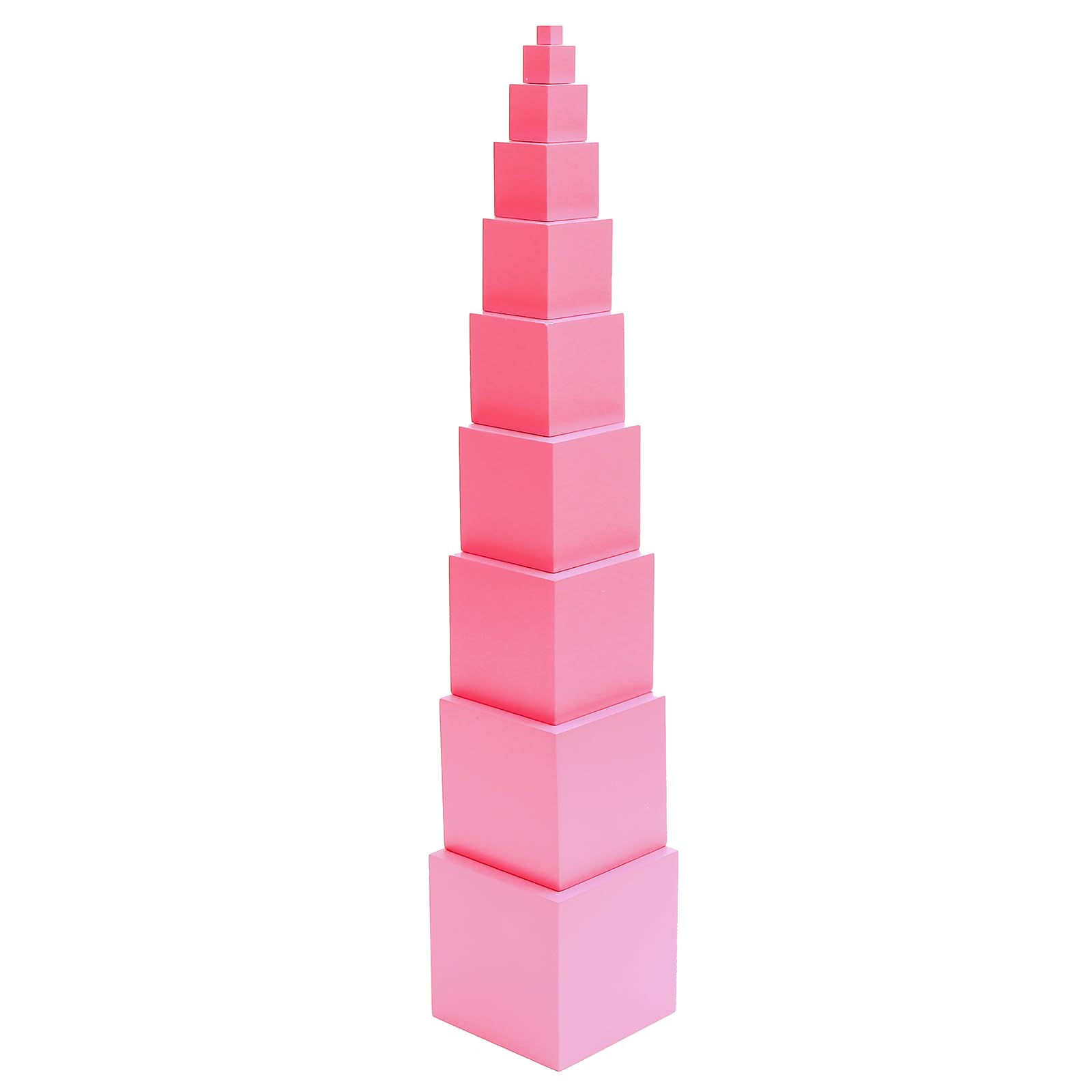
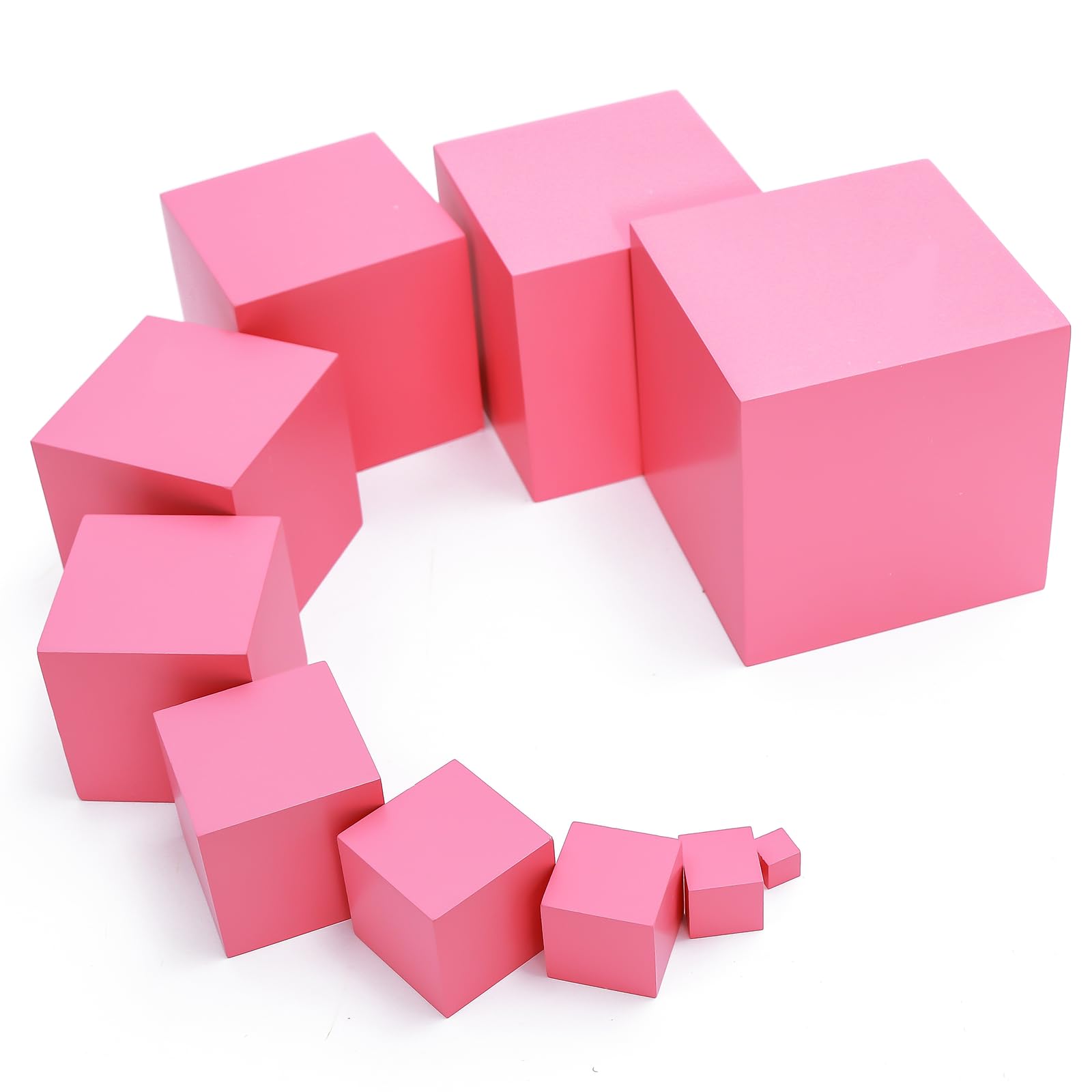
Stacking toys are arguably the single most important category for one-year-olds. They teach size discrimination, hand-eye coordination, sequencing, and cause and effect (the satisfying crash when the tower falls). Research published in the Journal of Cognition and Development found that block and stacking play at 12 months predicts stronger math skills later in childhood.
Our top picks:
-
Grimm’s Rainbow Stacker (12 Pieces) - The gold standard of open-ended Montessori toys. Children use it for stacking, nesting, sorting, building bridges, and creative play well into preschool. Made in Germany from sustainably harvested lime wood with non-toxic water-based dyes.
-
Melissa & Doug Rainbow Stacker - A classic wooden ring stacker with 8 smooth, easy-to-grasp rings. Great entry-level stacking toy at a fraction of the Grimm’s price. The rings are chunky enough for new stackers.
-
Lovevery Stacking Cups - Muted, Montessori-friendly colors. Can be stacked, nested, used in water play, or as scoops in a sensory bin. One of the most versatile toys you can buy.
Montessori tip: Resist the urge to show your child the “right” way to stack. Let them explore. They will knock the tower down twenty times before they try to build it. Both activities are learning.
Best Push Walkers for New Walkers
For toddlers who are pulling to stand and cruising but not yet walking independently, a sturdy push walker can be a game-changer. The AAP specifically notes that wooden push toys (not seated walkers) can support walking development safely.
The key is weight. A lightweight push walker will shoot out from under a wobbly toddler. A heavier wooden cart provides the resistance and stability they need to practice without tipping.
Our top picks:
-
HABA Walker Wagon - Adjustable brake system so you can increase resistance for beginners and reduce it as they gain confidence. Doubles as a toy cart. This is the push walker we recommend most often.
-
Labebe Wooden Push Walker - Solid construction with a storage compartment. Adding books or blocks to the compartment increases weight, making it more stable for early walkers.
-
Radio Flyer Classic Push Walker - A budget-friendly option with a clean design. Not as heavy as the HABA, but still a significant improvement over plastic alternatives.
Once your toddler is walking confidently, transition to pull toys. A wooden pull-along dog or duck encourages walking while looking backward, which develops a different set of balance skills.
Best Shape Sorters
Shape sorters are one of the most research-backed toys for toddlers. They combine problem-solving (which hole does this go in?), fine motor control (rotating the shape to fit), and early geometry concepts. A study in Child Development found that children who regularly engaged with shape-sorting toys showed improved spatial reasoning by age 3.
Our top picks:
-
PlanToys Shape Sorter - Beautiful minimalist design with just 4 shapes. Made from sustainable rubberwood. The shapes are chunky and easy to grip. Excellent for beginners who are just learning the concept.
-
Melissa & Doug Shape Sorting Cube - Classic wooden cube with 12 shapes. More challenging than the PlanToys version. Best for 15-24 month olds who have mastered basic shapes and are ready for a challenge.
-
Hape Shake and Match Shape Sorter - A round design that also functions as a rattle. The shapes are color-coded to the matching holes, adding a visual cue that helps younger toddlers.
Progression tip: Start with a 3-4 shape sorter around 12 months. By 18 months, most toddlers can handle 6+ shapes. If your child is frustrated, simplify by showing them just one shape at a time.
Best Simple Puzzles
Knob puzzles are a Montessori classroom staple. The large knob on each piece trains the pincer grasp (the same grip needed for writing later), and the puzzle format introduces vocabulary, matching, and spatial awareness.
Our top picks:
-
Melissa & Doug Jumbo Knob Puzzles - Available in shapes, pets, vehicles, and more. The oversized knobs are perfect for small hands. At under $15, these are one of the best value Montessori toys available.
-
Hape Chunky Animal Puzzle - The animal pieces are thick enough to stand upright, doubling as figurines for pretend play. Two toys in one.
-
Lovevery First Puzzle Set - Progressively challenging set starting with single-piece puzzles and working up to multi-piece. Excellent for parents who want one purchase that grows with their child.
For more about how puzzles and other Montessori materials compare to conventional toys, see our breakdown of Montessori toys vs. regular toys.
Best Musical Instruments and Sound Toys
Music is not just entertainment for toddlers. Research from the Neurosciences Institute shows that rhythmic play strengthens neural pathways associated with language development. In Montessori, musical instruments are valued because they are real (not electronic approximations) and give the child control over the sound they produce.
Our top picks:
-
Hape Pound and Tap Bench - Combines a ball pounding bench with a xylophone. Satisfies the need to bang things (totally developmentally appropriate at this age) while introducing pitch and melody.
-
Egg Shaker Set (6 Pack) - One of the simplest and most effective musical toys. Toddlers can shake them, roll them, hide them, and sort them by color. Perfect for introducing rhythm during music time.
-
Green Tones Wooden Drum - A real drum made from sustainably harvested rubberwood. Comes with a wooden mallet. The tone is pleasant (important for your sanity) and it is durable enough to withstand enthusiastic toddler drumming.
Practical Life Activities: The Heart of Montessori
Practical life activities are what truly set Montessori apart from other educational approaches. These are not really “toys” at all; they are real-life activities scaled down to toddler size. Maria Montessori observed that children are far more engaged by real work than by make-believe versions of it.
For one-year-olds, practical life activities build concentration, coordination, independence, and a sense of order. Here are the best options organized by difficulty:
Beginner (12-15 months):
- A small basket for carrying objects from room to room
- A child-sized cloth for wiping surfaces
- Transferring large objects (balls, blocks) from one container to another
- Self-feeding with a toddler spoon and bowl set
Intermediate (15-18 months):
- Child-sized broom and dustpan for sweeping
- Scooping dry beans or rice from one bowl to another with a large spoon
- Putting dirty clothes into a hamper
- Watering a plant with a small pitcher
Advanced (18-24 months):
- Pouring set with small pitchers for water transfer activities
- Spreading butter on toast with a child-safe knife
- Washing fruits and vegetables
- Sorting laundry by color
Reality check: Practical life activities are messy at first. That is the point. A toddler who spills water while pouring is learning muscle control, spatial awareness, and problem-solving. Put a towel under the workspace and let them practice.
Object Permanence and Cause-and-Effect Toys
Around 12 months, most children have developed object permanence (understanding that things exist even when hidden). Montessori classrooms use specific materials to reinforce and extend this understanding.
Our top picks:
-
Montessori Object Permanence Box - A simple wooden box with a hole on top and a tray that catches the ball. The child drops the ball in, it disappears, then reappears in the tray. Toddlers will repeat this dozens of times in a single sitting, which is exactly the kind of focused repetition that builds neural connections.
-
Montessori Ball Drop with Tray - A variation with multiple balls and a ramp. Adds visual tracking to the object permanence concept.
-
Montessori Coin Drop Box - Uses a thin slot instead of a round hole, requiring a more precise hand position. Ideal for 14-18 month olds who have mastered the basic ball drop.
These toys may look simple to adults, but they are doing heavy cognitive lifting for your toddler. The predictable outcome (ball goes in, ball comes out) is deeply satisfying and helps build an understanding of cause and effect that underpins all future scientific thinking.
Wooden Blocks: The Most Versatile Toy You Can Own
If you could only buy one type of toy for a one-year-old, wooden blocks would be the right choice. A study from the University of Washington found that block play in toddlerhood is associated with higher language scores, likely because caregivers naturally narrate block play (“Let’s put the big one on top!”).
Our top picks:
-
Melissa & Doug Wooden Building Blocks (100 Piece Set) - Four colors, nine shapes. These are the classic unit blocks that belong in every playroom. At 100 pieces, there are enough for building, sorting, counting, and pattern-making as your child grows.
-
Grimm’s Waldorf Blocks - Organic shapes and rainbow colors. More artistic than standard unit blocks. Beautiful as an open-ended creative material.
-
Tegu Magnetic Wooden Blocks - Built-in magnets allow structures that regular blocks cannot achieve. This extends their usefulness well beyond the toddler years. Made from sustainably sourced Honduran hardwood.
At 12 months, your toddler will mainly carry blocks, bang them together, and knock down towers you build. By 18 months, they will start stacking 3-4 blocks independently. By 24 months, simple structures emerge. Every stage is valuable.
Toy Rotation: How to Keep Things Fresh
One of the most practical Montessori strategies parents can adopt is toy rotation. The concept is simple: instead of having 30 toys available at once, you display 4-5 toys on a low shelf and store the rest out of sight. Every 1-2 weeks, you swap some toys out and bring new ones in.
Why rotation works:
- Reduces overstimulation. Research from the University of Toledo found that toddlers played longer and more creatively when they had fewer toys available (4 vs. 16).
- Increases focus. With fewer choices, your child engages more deeply with each toy.
- Keeps toys feeling new. A toy that was boring two weeks ago feels exciting when it reappears.
- Teaches the child to complete an activity. With a small, curated selection, children are more likely to use a toy to its full potential before moving on.
How to set up rotation:
- Get a low, open shelf (2-3 levels). A Montessori toy shelf works perfectly.
- Place 4-5 toys on the shelf, each in its own space or on a small tray.
- Store remaining toys in a closet or bin, out of sight.
- Observe your child. When they stop engaging with a toy for several days, rotate it out.
- Bring back “old” toys when they match a new developmental interest.
Shelf setup tip: Arrange toys from simplest (left/top) to most challenging (right/bottom). This creates a natural flow and makes it easier for your toddler to choose independently.
Safety Considerations for 1 Year Old Toys
Safety is non-negotiable with this age group. One-year-olds still put everything in their mouths, and their motor control is imprecise enough that small parts pose real choking risks.
Essential safety guidelines:
- Choking test: If a toy or piece fits inside a toilet paper roll, it is a choking hazard for children under 3. This applies to wooden beads, puzzle pieces, and small blocks.
- Material safety: Choose toys finished with non-toxic, water-based dyes or stains. Look for EN 71 (European) or ASTM F963 (American) safety certifications.
- No strings longer than 12 inches. Pull toys with long strings should only be used under supervision. The AAP warns about strangulation risks from cords and strings.
- Weight matters. A heavy wooden block dropped from a highchair can cause bruising. Supervise block play at elevated surfaces.
- Check regularly. Wooden toys can splinter over time. Run your hand over toys monthly and sand down any rough spots.
- Avoid these: Toys with small magnets (serious ingestion risk), water beads, balloons, and any toy with battery compartments that are not screw-secured.
Best Brands for Montessori Toys
Not all “Montessori” labeled toys actually align with Montessori principles. Here are brands that consistently produce high-quality, genuinely Montessori-aligned toys:
| Brand | Price Range | Why We Recommend Them |
|---|---|---|
| Grimm’s | $$$ | Handmade in Germany, sustainably sourced lime wood, non-toxic dyes. The quality standard. |
| PlanToys | $$ | Rubberwood from expired rubber trees, zero-waste manufacturing, thoughtful design. |
| HABA | $$ | German engineering, excellent safety standards, durable enough for daycare use. |
| Melissa & Doug | $ | Affordable entry point, widely available, good quality for the price. |
| Lovevery | $$$ | Research-backed play kits delivered by stage. Convenient but premium-priced. |
| Hape | $$ | Bamboo and sustainably sourced wood, good middle ground between quality and price. |
| Tegu | $$-$$$ | Magnetic wooden blocks, B-Corp certified, made in Honduras supporting local communities. |
Budget-Friendly Montessori Toy Options
You do not need to spend hundreds of dollars to create a Montessori-aligned play environment. Many of the best Montessori “toys” are household items that cost nothing.
Free or nearly free options:
- Tupperware and containers with lids - Opening and closing containers is a favorite activity at this age. Use different sizes for nesting.
- Wooden spoons and metal bowls - Banging, stirring, scooping, and transferring. A $2 wooden spoon from the kitchen drawer is a legitimate Montessori material.
- Cardboard boxes - For putting things in and taking things out. Cut a hole in the top for a DIY object permanence box.
- A basket of safe kitchen items - Whisk, spatula, measuring cups. Real objects from the real world.
- Socks for matching - Lay out 3 pairs and let your toddler match them. This is a genuine Montessori practical life exercise.
Best budget buys under $15:
- Melissa & Doug Jumbo Knob Puzzle - Under $10, built to last
- Egg Shaker Set - Under $10 for a 6-pack
- Stacking Cups Set - Under $8, endless play possibilities
- Wooden Lacing Beads - Under $12, excellent for fine motor development (18+ months, supervised)
The Montessori philosophy has never been about buying expensive things. It is about observing your child, providing purposeful materials, and then stepping back to let them work.
How to Transition From Baby Toys
If your child has been playing with Montessori baby toys designed for the 0-12 month range, the transition to toddler materials should be gradual. You do not need to replace everything at once.
Signs your child is ready to move on from a toy:
- They complete it quickly and without concentration (the puzzle is too easy)
- They have not touched it in over two weeks despite it being available
- They are using it in unintended ways out of boredom (throwing the stacking rings instead of stacking)
- They show interest in more complex versions of the same concept
Transition timeline:
- 12-14 months: Introduce shape sorters, first knob puzzles, push walker
- 14-16 months: Add object permanence box, simple practical life activities
- 16-18 months: Introduce musical instruments, more complex puzzles, pouring activities
- 18-24 months: Begin preparing for 2-year-old Montessori toys like threading beads, simple art materials, and pretend play items
Creating a Montessori Play Space at Home
The environment is as important as the toys themselves. In Montessori, the prepared environment does half the work, allowing the child to choose activities independently and develop self-direction.
Essential elements of a toddler play space:
- Low, open shelf at the child’s eye level. No toy boxes where everything gets jumbled together.
- 4-5 activities displayed on the shelf, each in its own defined space.
- A small table and chair at the right height (elbows at 90 degrees when seated) for puzzles and art.
- A floor mat or rug to define the work area. In Montessori classrooms, children learn to unroll a mat before starting an activity.
- Child-accessible storage so they can get materials out and put them away independently.
- Minimal visual clutter. Neutral walls, natural materials, and an uncluttered aesthetic help toddlers focus.
Start small: You do not need to renovate a room. One low shelf in the corner of the living room with 4 carefully chosen toys is a perfectly good Montessori play space.
Final Thoughts
The best Montessori toys for one-year-olds are not the most expensive or the most Instagram-worthy. They are the ones that match your specific child’s developmental stage and interests right now.
Start by observing. Watch what your toddler gravitates toward. Are they a mover who needs a push walker and gross motor challenges? A tinkerer who wants to figure out how the shape sorter works? A budding musician who bangs on everything?
Then choose 4-5 purposeful toys, set them on a low shelf, and let your child lead. Rotate when interest wanes. Add complexity when mastery appears. And remember that the most powerful Montessori material of all is your patient, unhurried presence as they explore their world.
For a deeper understanding of the philosophy behind these recommendations, visit our complete guide on what Montessori toys are and why they work.