Montessori at home is about preparing your environment, following your child's interests, and stepping back. You do not need a certification or expensive toys. Focus on low shelves, child-sized tools, real activities, and rotating a few quality materials instead of filling the room with stuff.
You have probably seen the word “Montessori” attached to everything from wooden toys to $3,000 toddler beds. Maybe a friend swears by it. Maybe an Instagram reel made it look impossibly beautiful and impossibly expensive.
Here is the truth: Montessori at home is neither complicated nor costly. It is a way of thinking about your child, your space, and your role as a parent. And you can start today with things you already own.
This guide walks you through the real principles, the practical setup, the common traps, and the first steps — without the Instagram filter.
What Montessori Actually Is (and What It Is Not)
Montessori is an educational philosophy developed by Dr. Maria Montessori, an Italian physician, in the early 1900s. After years of clinical observation of children, she reached a conclusion that still sounds radical: children do not need to be taught — they need an environment that allows them to teach themselves.
In practical terms, this means:
- The child chooses what to work on
- The adult prepares the environment and then steps back
- The materials are designed so the child can see their own mistakes without being corrected
- Real activities (cooking, cleaning, pouring, folding) are valued more than academic worksheets
Montessori is NOT:
- A brand name (anyone can slap “Montessori” on a product)
- A rigid curriculum you must follow perfectly
- A requirement for all-wooden, all-beige everything
- Only for wealthy families or private schools
- Permissive parenting where the child has no boundaries
The American Montessori Society describes it as “an education for life” — a framework, not a product catalog.
The Four Core Principles You Need to Understand
You do not need to memorize Montessori theory. But these four principles will change how you see your child and your home.
1. The Prepared Environment
In Montessori, the environment is considered the “third teacher” (after the parent and the child). A prepared environment is one where:
- Everything is accessible at the child’s height
- Materials are organized and displayed on open shelves (not dumped in bins)
- There is order — each item has a specific place
- The space is uncluttered — fewer choices, not more
- It is beautiful — clean, calm, and inviting
This does not mean remodeling your house. It means making strategic adjustments: a low shelf in the living room, a step stool in the kitchen, hooks at child height for their jacket, a small pitcher they can pour from independently.
The prepared environment sends a message: “This space is for you. You are capable of using it.”
2. Following the Child
This is the most misunderstood Montessori concept. “Following the child” does not mean letting them do whatever they want. It means observing what they are naturally drawn to and providing materials that match those interests.
If your 18-month-old is obsessed with opening and closing containers, that is a signal. Provide containers with different lids — screw tops, flip lids, snap lids. They are teaching themselves fine motor skills through their own curiosity.
If your 3-year-old wants to help cook dinner every night, let them. Give them a child-safe knife, a cutting board, and real vegetables. They are developing concentration, sequencing, and independence.
Following the child requires the hardest skill for most parents: observation without intervention. Watch before you help. Wait before you correct. Trust before you redirect.
3. Practical Life
Maria Montessori considered Practical Life the foundation of everything. Before a child learns to read, they need to learn to:
- Pour water without spilling
- Button their own shirt
- Sweep crumbs from the floor
- Fold a washcloth
- Set the table
- Water a plant
These activities build concentration, coordination, independence, and order — the four pillars that support all later learning. A child who can focus on pouring water for five minutes can later focus on reading for fifteen.
Practical Life is also the cheapest part of Montessori. You already own the materials: sponges, pitchers, brooms, laundry baskets, spray bottles. Your child just needs access and permission.
4. Intrinsic Motivation
Montessori environments minimize external rewards (sticker charts, praise, treats) and maximize internal satisfaction. The child completes a task because the task itself is satisfying, not because an adult said “good job.”
This is built into the materials: a puzzle piece that fits correctly, a tower that stands up, water poured without spilling. The feedback comes from the activity, not from you.
In practice, this means shifting your language:
- Instead of “Good job!” try “You did it. You poured the water all by yourself.”
- Instead of “That is wrong” try nothing — let the child discover the error
- Instead of “Let me help you” try “Would you like me to show you?”
Setting Up Your Home: Room by Room
You do not need a dedicated Montessori playroom. Every room in your house can be adapted.
The Living Room / Main Play Area
This is where the magic happens for most families. You need:
One low shelf. A simple bookshelf laid on its side, an IKEA KALLAX, or any shelf at your child’s eye level. Display 6-8 activities, each in its own tray or basket. Rotate every 1-2 weeks.
A small table and chair. Child-sized. This is their workspace for art, puzzles, and snacking. Thrift stores are gold mines for these.
A few quality materials. For a 1-year-old, this might include a Melissa & Doug Shape Sorting Cube, a set of stacking rings, a basket of wooden balls, a simple puzzle, and a pouring activity. For a 2-year-old, add lacing beads, a Grimm’s Rainbow Stacker, play dough with tools, and a threading activity.
A basket for books. Forward-facing if possible, so the child can see the covers and choose independently.
The Kitchen
The kitchen is Practical Life headquarters. Invest in:
- A learning tower or sturdy step stool so your child can reach the counter
- A child-safe knife (a crinkle cutter works for toddlers)
- A small pitcher for pouring their own water or milk
- Their own shelf in a low cabinet with a plate, cup, bowl, and snack basket
Children as young as 18 months can wash fruit, tear lettuce, stir batter, and scoop ingredients. By age 3, most children can make simple snacks entirely on their own.
The Bedroom
The Montessori bedroom prioritizes independence:
- A floor bed or low bed the child can get in and out of alone
- Clothing at child height — a low rod or drawer system with limited choices (2-3 outfits)
- A small mirror at their level
- A book basket by the bed
The key shift: the bedroom belongs to the child. They choose when to get out of bed (within boundaries), what to wear, and what book to look at.
The Bathroom
- A step stool at the sink
- Their toothbrush and soap within reach
- A small towel on a low hook
- A mirror at their height
By age 2, most children can wash their own hands, brush their teeth (with supervision), and wipe their face — if the environment allows it.
The Materials: What You Actually Need
Here is where most parents overthink it. You do not need a catalog of Montessori materials. You need a curated, small selection that matches your child’s current developmental stage.
Ages 0-6 Months
- High-contrast cards (black and white images)
- A Montessori mobile (Munari, Gobbi, or dancer mobile)
- A wooden rattle or grasping toy
- A small mirror (unbreakable)
- Soft fabric balls in muted colors
Total investment: $20-$50 if you buy new. Most can be DIY.
Ages 6-12 Months
- Object permanence box (ball drops in, reappears)
- Simple stacking rings
- A basket of sensory balls (different textures)
- Nesting cups
- A wooden egg and cup
- Board books with real images (not cartoons)
Ages 12-24 Months
- Shape sorter (Melissa & Doug Shape Sorting Cube is a classic)
- Hammer and peg toy
- Simple puzzles with knobs (3-5 pieces)
- Posting/slot activities (dropping coins into a piggy bank)
- Pouring activities (dry beans, then water)
- A small broom and dustpan
Ages 2-3 Years
- Grimm’s Rainbow Stacker or similar open-ended building toy
- Lacing beads or threading activities
- Play dough with real tools (rolling pin, cookie cutters, garlic press)
- Scissors and cutting strips
- Magnetic tiles for building
- Practical life activities (washing dishes, folding cloths, transferring with tongs)
Ages 3-6 Years
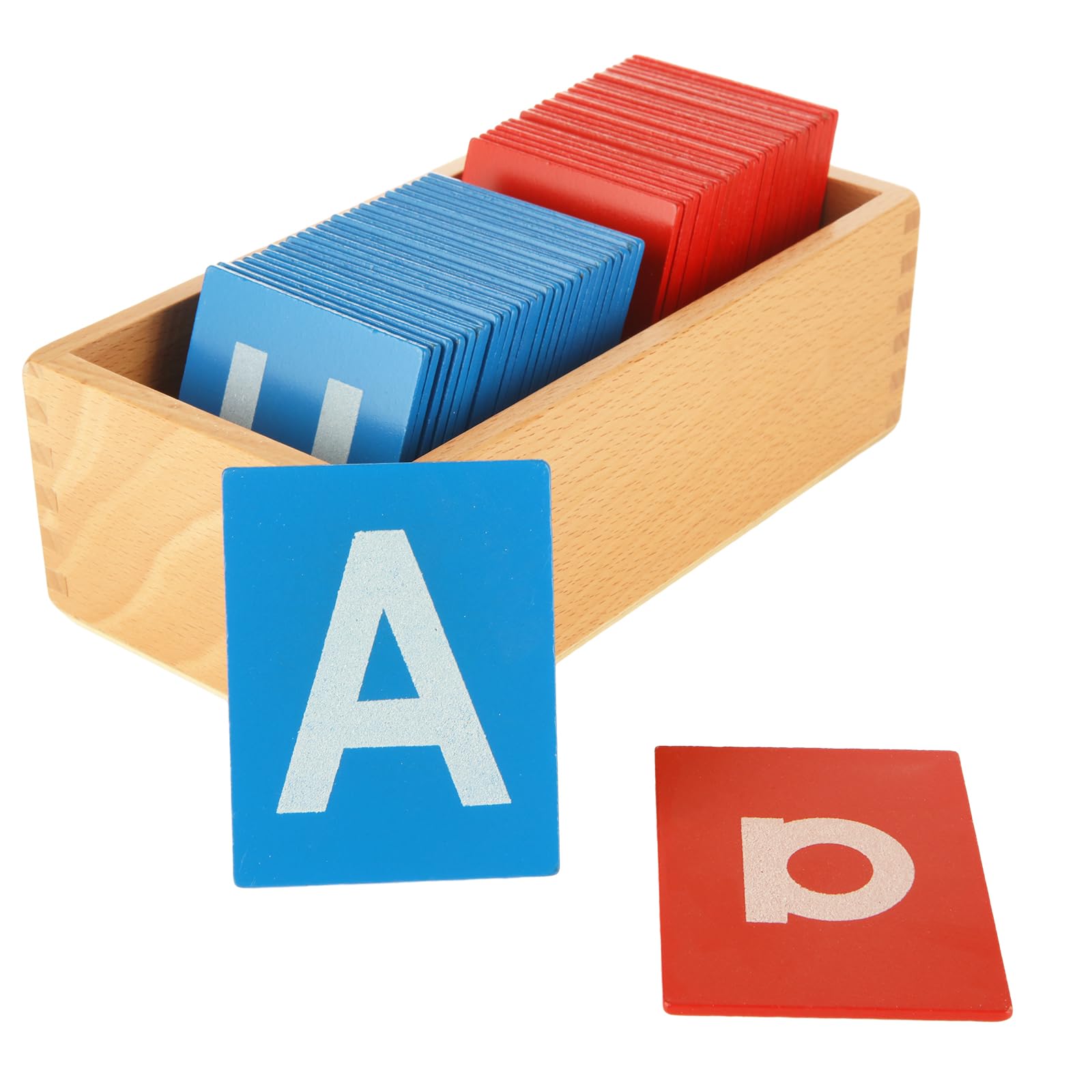
- Sandpaper letters (for pre-writing)
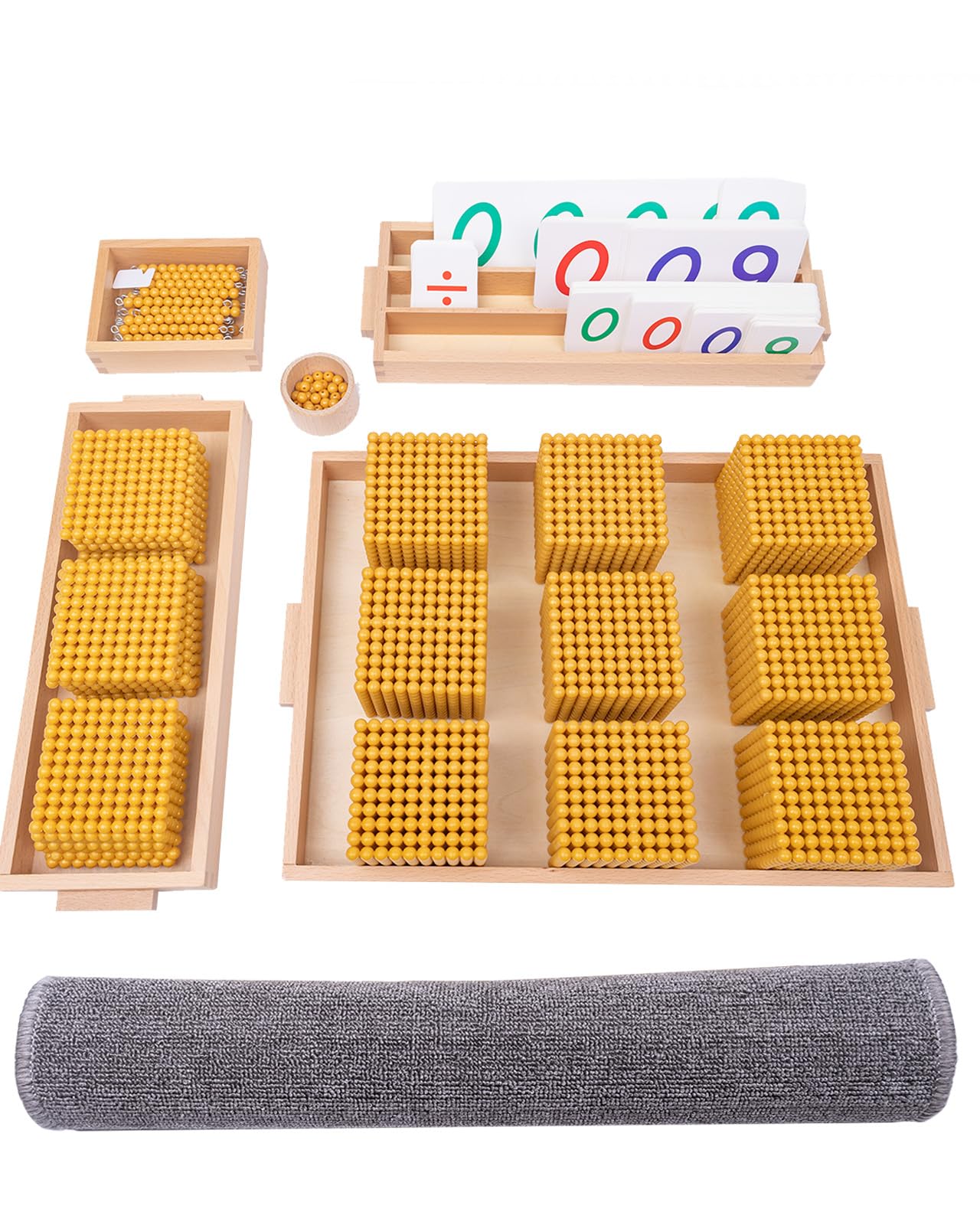
- Number rods or Montessori math beads
- Geography puzzle maps
- Science materials (magnifying glass, magnets, plant-growing kit)
- Sewing or weaving activities
- More advanced practical life (cooking, ironing, polishing)
For curated lists by age, see our guides for babies, 1-year-olds, and 2-year-olds.
You Do Not Need Expensive Toys
This deserves its own section because the Montessori toy industry has exploded — and much of it is overpriced.
Household items that are better than bought toys:
- A basket of wooden clothespins + a small bucket = transferring activity
- A whisk + bowl + soap suds = Practical Life and fine motor
- A spray bottle + cloth = window washing (toddlers love this)
- A muffin tin + pom poms + tongs = sorting and fine motor
- Measuring cups in the bathtub = pouring and water play
- A sock basket = matching pairs (math!)
- Tupperware containers with different lids = problem-solving
DIY Montessori materials:
- Cut straws into pieces + a colander = threading
- Empty bottles with screw caps = twisting (fine motor)
- A cardboard box with a slot cut in the top = posting activity
- Sandpaper letters: buy sandpaper, cut letters, glue to cardboard
- Sensory bottles: fill empty water bottles with rice, glitter, beads
The point is never the price tag. The point is whether the material invites your child to concentrate, explore, and master a skill independently. A $2 set of tongs and a bowl of cotton balls does this just as well as a $40 branded transfer set.
The Rotation System: Less Is More
One of the most transformative Montessori practices is toy rotation. Instead of making all toys available at once, you:
- Select 6-8 activities for the shelf
- Store everything else in a closet or bin (out of sight)
- Observe what your child uses and what they ignore
- Every 1-2 weeks, swap out ignored items for stored ones
- Return favorites to the shelf quickly
Why this works:
- Reduces overwhelm. Research from the University of Toledo found that children with fewer toy options played longer and more creatively with each one.
- Increases concentration. Fewer choices mean the child engages more deeply.
- Makes old toys feel new. A toy stored for two weeks comes back exciting.
- Keeps the environment orderly. Easier to clean up, easier to maintain.
Start with a simple spreadsheet or even a sticky note on the shelf to track what is out and when it was last rotated.
Common Mistakes (and How to Avoid Them)
Mistake 1: Buying Everything at Once
You see a Pinterest board with a perfect Montessori shelf and order $500 worth of materials. Your child ignores half of them. Start with 3-4 items. Observe. Add slowly.
Mistake 2: Being Too Rigid
“That is not a Montessori toy!” is a phrase that helps nobody. Montessori is a philosophy, not a religion. If your child loves LEGO Duplo, dinosaur figurines, or a play kitchen — those can absolutely coexist with Montessori materials. The key is intentional curation, not militant purity.
Mistake 3: Correcting Too Much
Your child is using the shape sorter “wrong.” They are putting the shapes through the top instead of the holes. Your instinct is to redirect. Resist. They are experimenting. They are problem-solving. They will figure out the holes eventually — and when they do, the learning will be theirs, not yours.
Mistake 4: Expecting Immediate Results
Montessori is a long game. Your child may take 2-4 weeks to adjust to a new environment. During that time, they might seem uninterested or test boundaries. This is normal. Consistency and patience are your tools.
Mistake 5: Ignoring the Child’s Stage
Providing materials that are too advanced is just as problematic as providing ones that are too simple. If your 14-month-old is not interested in the shape sorter, they are not “behind.” They may need a simpler posting activity first. Observe, adjust, follow.
Mistake 6: Forgetting About Yourself
The biggest shift in Montessori at home is not in the environment — it is in the adult. You need to slow down, observe more, talk less, and resist the impulse to help. This is genuinely difficult for most parents. Be patient with yourself too.
Where to Start: Your First Weekend
If you want to start Montessori at home this weekend, here is a concrete plan:
Saturday morning: Observe. Spend 30 minutes watching your child play without interfering. What do they gravitate toward? What do they repeat? What frustrates them? Write down three observations.
Saturday afternoon: Declutter one area. Choose the main play space. Remove everything. Yes, everything. Clean the surface. Now put back only 6-8 items that match what you observed. Everything else goes in a closet.
Sunday morning: Prepare one Practical Life activity. Set up a small station — a pouring exercise with dry beans, a sponge-squeezing activity, or simply put a step stool in the kitchen and invite your child to help wash fruit.
Sunday afternoon: Adjust your home. Pick one room and make three changes: lower one thing to child height, remove one barrier to independence, and add one tool they can use on their own (a low hook for their jacket, a small pitcher, their own shelf in a cabinet).
That is it. Four small steps. No purchases required.
The Montessori Mindset: What Really Matters
After all the shelf setups and material selections, Montessori at home comes down to this:
Trust your child. They are more capable than you think. A 15-month-old can carry a glass (a small one). A 2-year-old can pour their own water. A 3-year-old can slice a banana. Give them the chance.
Prepare, then step back. Your job is not to teach. It is to set the stage and get out of the way.
Observe more than you talk. The impulse to narrate, praise, and redirect is strong. Practice watching in silence. You will learn more about your child in 10 minutes of observation than in an hour of directed play.
Progress over perfection. Your home will never look like a Montessori classroom photo on Instagram. It does not need to. A single low shelf, a consistent rotation, and a willingness to let your child try — that is enough.
It is never too late. Whether your child is 6 months or 6 years, introducing Montessori principles into your home will benefit them. Start where you are.
For a deeper dive into what makes a toy Montessori and how Montessori materials compare to conventional options, those guides break down the philosophy from a materials perspective.
The best time to start Montessori at home was the day your child was born. The second best time is today.