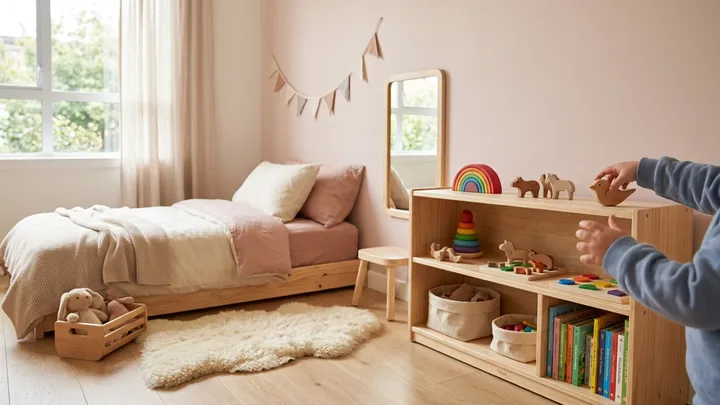
A Montessori bedroom is a complete environment designed for the child to use independently. It evolves dramatically from infancy to age 6+, but the core principles stay constant: child-accessible everything, beauty and order, real materials, and a few well-chosen items rather than many. This guide covers each stage with concrete setups, furniture lists, and IKEA-friendly options.
The most striking thing about a well-designed Montessori bedroom is what you do not see. There is no crib towering over the room. There is no dresser the child cannot open. There are no toys spilling out of bins. There is no chair that is too tall, no shelf that is too high, no door that is locked.
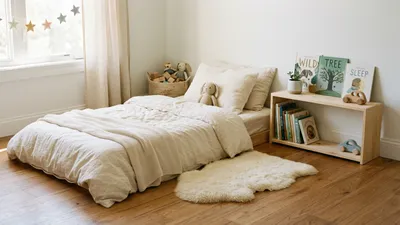
What you see instead is a room scaled to a child. A bed close to the floor, neat and made by the small hands that sleep in it. A low shelf with four or five carefully chosen items. A wardrobe with three or four outfit options the child can reach. A reading corner with a basket of books. A mirror mounted at child height. A pot of dried lavender on a low shelf.
The first time you see a room like this, the question is not whether it is beautiful. The question is whether it is safe — and the answer, once you understand how Montessori environments work, is yes. More than that: it is safer than the conventional nursery, because the child has been trusted with a space they can actually use.
This guide walks through how to build a Montessori bedroom for each age, what to include, what to leave out, and how to do it on a real budget.
The Five Constants
Before age-by-age specifics, here are the five elements that exist in every Montessori bedroom, regardless of age.
1. A low bed. From the floor mattress of infancy to the simple low platform of school age, the bed is always something the child can enter and exit independently. (For the complete philosophy and safety setup, see our Montessori floor bed guide.)
2. A low open shelf. One shelf, low enough for the child to reach independently, with 6-10 carefully chosen items displayed (not crammed). The shelf is the heart of the room — it is where curation, rotation, and intentional engagement happen.
3. A child-accessible wardrobe. Whether this is a low rod in a closet, a small chest of drawers, or a freestanding rack, the child must be able to choose and access their own clothing. This is a daily practice in self-care and decision-making.
4. A reading corner. A small soft surface (sheepskin, cushion, low chair) plus a basket of 4-6 books rotated regularly. Reading is woven into every Montessori environment.
5. A low mirror. Wall-mounted, child-eye-height, made of shatter-resistant material. The mirror supports self-recognition for babies, dressing for toddlers, and self-care for older children.
Get these five right, and the room is already 80% Montessori. Everything else is age-specific refinement.
Birth to 5 Months: The Newborn Room
Newborns do not need much. The mistake most parents make is over-buying. Here is what actually serves a baby in the first months.
Core Setup
Sleep: Following AAP guidelines, newborns should sleep in the same room as parents (not the same bed) for at least the first 6 months. The Montessori bedroom for a newborn often serves as a daytime space and back-up nighttime space. A floor mattress (twin size, firm, with a fitted sheet — no other bedding) is the foundation.
Movement mat: Roll out a small play mat or sheepskin for tummy time and floor exploration. Keep this area clear of other items so the baby has space to move freely.
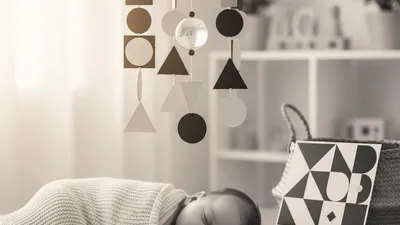
Mobile. A simple Munari mobile (black and white shapes) hung from the ceiling about 12 inches above where the baby lies. Eye-tracking and visual development. Rotate to the Octahedron mobile (colored) around 6 weeks, then the Gobbi (graded colors) around 8 weeks.
Low shelf: Mostly empty at this stage. A few simple grasping toys, a board book, a small basket. Less is genuinely more.
Mirror: Wall-mounted at floor level, where the baby can see themselves during tummy time. Babies are fascinated by faces, including their own.
What to Skip
- A crib (you have a floor mattress)
- A changing table (use a low changing pad on the floor or bed)
- Most plush toys (sensory overload for a newborn)
- Bright colors or busy patterns
- Sound-and-light toys
- Anything battery-operated
A Note on the Family Bedroom
Most Montessori families during the newborn months actually use a small floor mattress in the parents bedroom (matching AAP safe sleep guidance) and reserve the child’s own bedroom for daytime use. This dual setup is fine. The principle stays the same: the baby sleeps in a safe, low surface they could leave if they were able to.
5-12 Months: The Mobile Baby
This is where the bedroom comes alive. The baby is now rolling, sitting, crawling, possibly pulling to stand. The room becomes a movement space as much as a sleep space.
Core Setup
Floor bed: Either a twin mattress directly on the floor or with a very low frame. The baby can now begin to use the bed independently — rolling onto it, crawling off when they wake.
Movement area: An open area of soft flooring (rug or play mat) where the baby can roll, crawl, and practice gross motor skills. A wall-mounted pull-up bar (a horizontal wooden dowel) helps the baby practice pulling to stand. Place it near a mirror so they can see themselves doing it.
Low shelf: 6-8 items at a time. Examples for this age: a wooden grasping toy, an object permanence box, a basket of treasure objects (small wooden bowls, fabric squares, large wooden rings), a board book, a soft cloth ball, a rattle. Rotate weekly.
Pikler triangle (optional): A small one in the corner if space allows. (See our Pikler triangle guide for setup details.)
Wardrobe: Begin to offer clothing choices visually. A low rod with 3-4 outfit options. The baby can touch and react even before they can dress themselves. This builds the future habit.
Critical Safety
This is the age where the room becomes a true safety zone, because the baby can now move through it. Complete the entire safety checklist before placing the baby in the room alone:
- Every outlet covered with full plates or tamper-resistant covers
- All furniture anchored to the wall (especially the shelf and dresser)
- All cords inaccessible
- All small objects out of reach (including coins, batteries, small toys that fit in a toilet paper roll)
- Window blinds either cordless or with cords inaccessible
- The bedroom door closed or gated as a safety boundary
12-24 Months: The Toddler
The toddler bedroom is where Montessori truly differentiates itself from conventional approaches. This is the age of independence, autonomy, and small but real responsibilities.
Core Setup
Floor bed: Now the child climbs in and out at will. Most toddlers settle into floor bed sleep routines around 14-18 months.
Low shelf: 8-10 items, more complex now. Examples: a knob puzzle, a shape sorter, a simple stacking ring, a small basket of board books, a posting toy (for dropping objects into a slot), a wooden vehicle, a small object permanence box with multiple shapes, a basket of textured fabric squares.
Practical-life area: A small basket with a hand mirror, hairbrush, and small lotion bottle for self-care practice. A small laundry basket in a corner where the child can put dirty clothes. A small cleaning kit (mini broom, mini dust pan) for participation in tidying.
Wardrobe: A low rod with 4-6 outfit choices. A small chair or stool nearby for sitting while dressing. Shoes on a low shoe rack. The toddler can begin to choose and dress themselves, with help.
Reading corner: A small floor cushion, a sheepskin, or a child-sized chair. A basket with 4-6 books. The toddler will spend significant time here — this is when reading routines establish themselves.
Mirror: Larger now, full body if possible. The toddler uses it for dressing, observing their movements, and self-recognition.
IKEA-Friendly Setup
A complete toddler bedroom from IKEA might include:
- KALLAX 2x4 turned horizontally as a low shelf (~$60)
- KURA bed in its low position with mattress (~$200)
- TROFAST small frame with white bins for materials (~$50)
- MULIG clothes rack as low wardrobe (~$10)
- HÄRLIG mirror, wall-mounted (~$10)
- STJÄRNBILD low table for art (~$30)
Total around $360, plus mattress and bedding. Less if you find used items.
2-3 Years: The Older Toddler
The room becomes increasingly the child’s own. They take more responsibility for it. They have preferences. They notice what is missing or out of place. This is good — let them care.
Refinements
Materials: More complex. Simple jigsaw puzzles, a few classic Montessori materials (pink tower, color tablets), small art supplies (washable markers, paper, glue stick), a small basket of natural treasures the child has collected.
Art station: A small low table where the child can do art independently. Materials accessible on a tray they can carry. A small framed corkboard or low gallery wall for displaying their creations.
Bookshelf: Begin to display books with the front cover facing out rather than spines. This invites engagement. A 2-tier low bookshelf with 8-12 books displayed forward, rotated weekly.
Practical life: Add a small flower vase for fresh flowers (the child fills it with water from a small pitcher), a small handheld dust mop, a small spray bottle and cloth for cleaning. Children at this age love real cleaning work.
Clothes: Reduce parental assistance. The child should be able to fully dress themselves by age 3 — shirt, pants, socks, shoes. The wardrobe should support this with simple, accessible items.
3-6 Years: The Preschool Room
By age 3, the child is fully inhabiting their bedroom as their own space. Capabilities have multiplied. The room reflects this.
Refinements
Bed: A simple low bed frame is fine now, or continue with the floor mattress. The bed is no longer “Montessori specific” — it is just the child’s bed.
Desk: A small desk and chair for art, writing practice, and concentration work. Drawers or shelves nearby with paper, pencils, and supplies. The desk is the early study center.
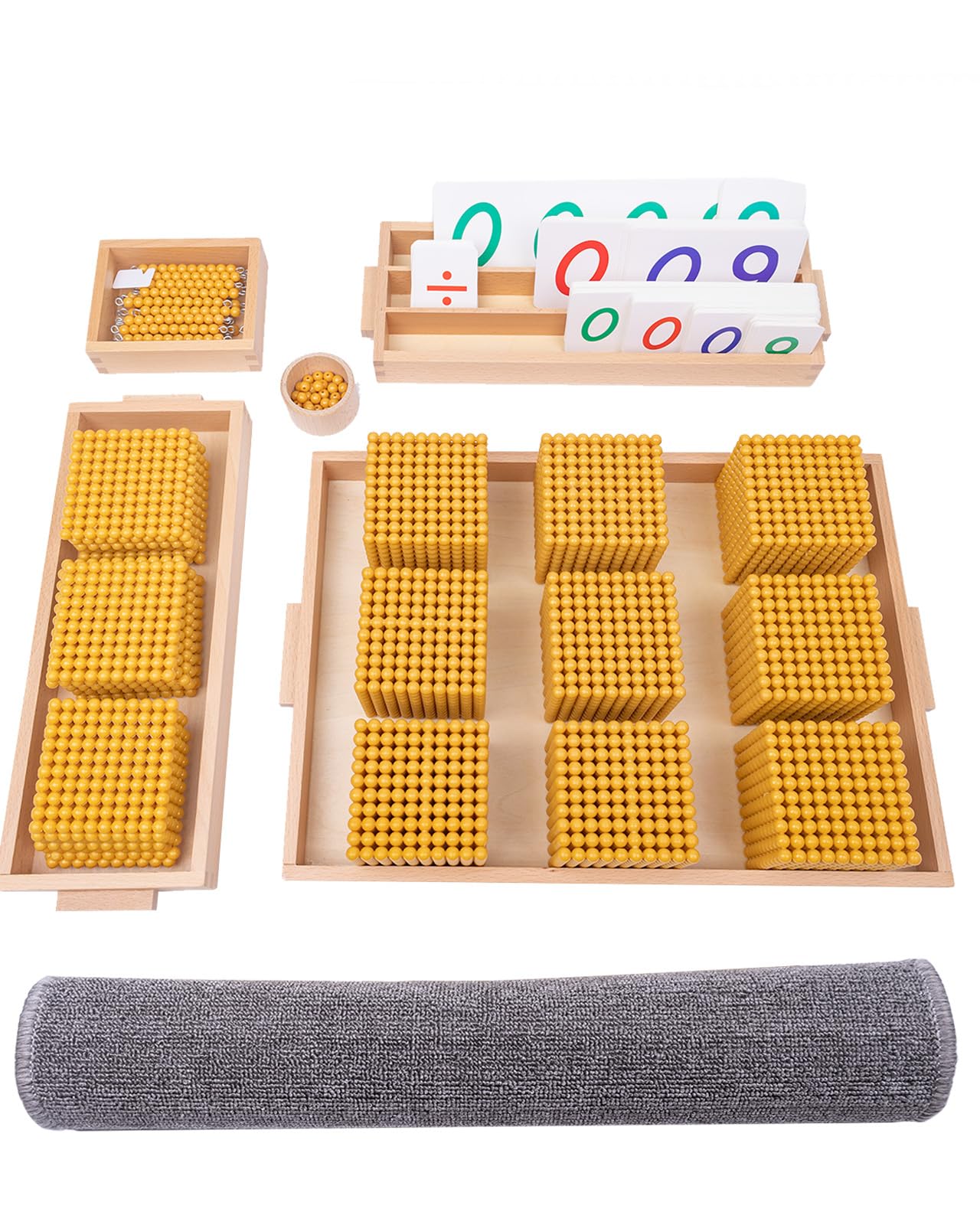
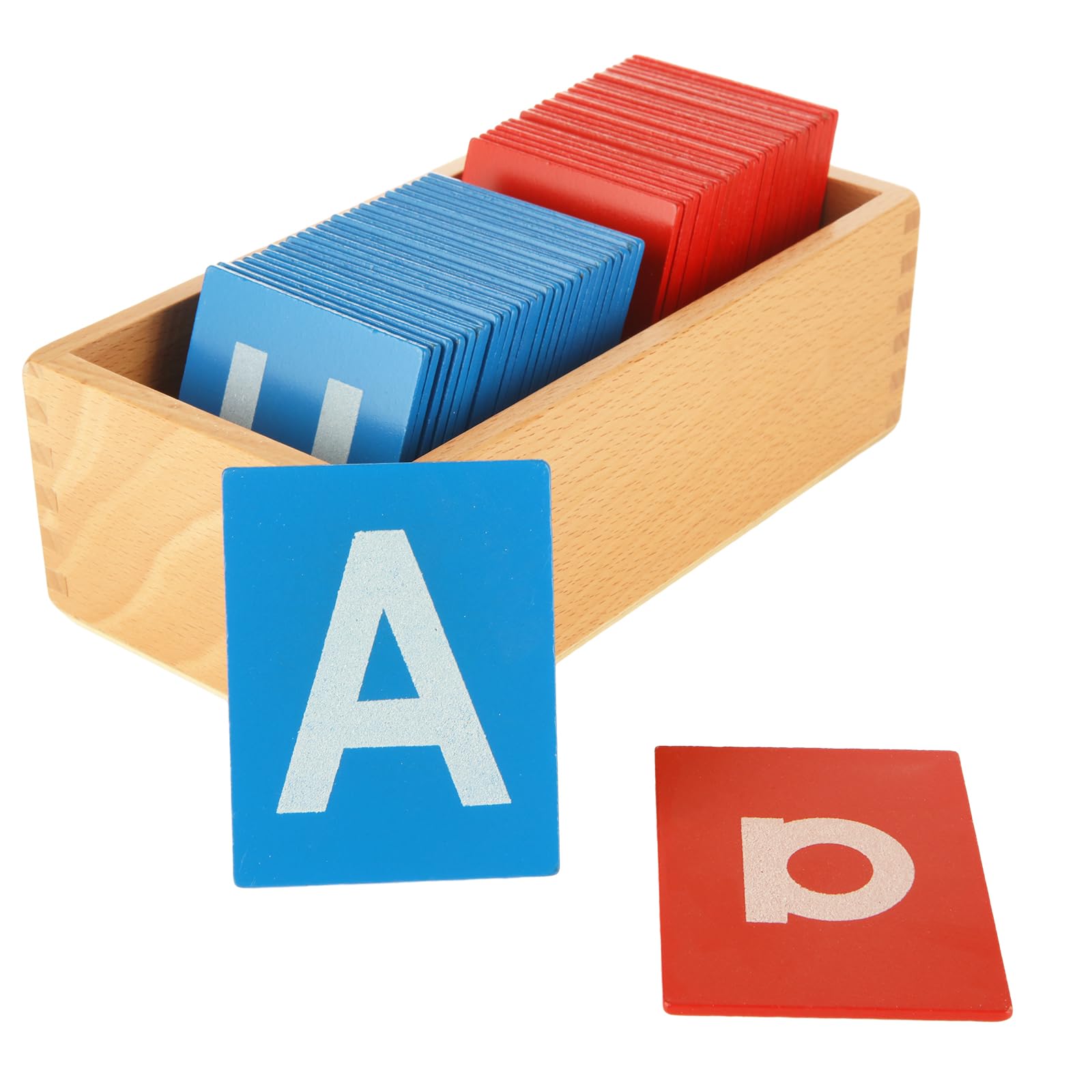
Materials shelf: This now functions almost like a small classroom. The shelf might include sandpaper letters, a moveable alphabet, math materials (number rods, golden beads), geography puzzles, and complex puzzles. Many families pair this with a small floor work mat.
Library: A proper bookshelf with 30-50 books, displayed by genre or topic. The child chooses their own reading material.
Personal touches: The child begins to have preferences about decor. Honor them within Montessori principles (real art over cartoons, simple over chaotic). A small framed photo, a piece of art they made, a treasured object on a small shelf.
Care of self: A small grooming station — comb, lotion, tissues, a small basket for jewelry or accessories. The child handles their own morning routine.
6+ Years: The School-Age Room
The Montessori bedroom for an elementary-age child is no longer specifically Montessori-looking, but the principles still apply. Privacy increases. Personal expression deepens. Study and reading take a more central role.
Refinements
Bed: A full size or twin bed at standard height (or still a low bed, depending on preference). The child decides how it is made up.
Study area: A real desk with drawers, a comfortable chair, good task lighting. Books and reference materials accessible. This is where homework and reading happen.
Personal projects: A shelf or table dedicated to ongoing projects — a model being built, an art piece in progress, a collection being organized. Respect this space.
Wardrobe: The child fully manages their own clothing, including putting it away after laundry.
Cleaning: The child is responsible for keeping the room clean, on a schedule they help create. Parents may help with deeper cleaning monthly.
Decor: Increasingly the child’s choice. They may have favorite art, posters of interests, photos of friends. The Montessori principle is to maintain calm and order, but the specifics belong to the child.
Common Concerns
“My child wants Disney bedding.” This is a real tension. Some families compromise (one Disney pillowcase, otherwise simple). Others stay firm. The principle is that the bedroom should be calm — characters and bright patterns work against this. But a stuffed Olaf is not going to destroy a Montessori environment. Pick your battles.
“What about toys?” Toys belong on the shelf, rotated, with intention. Bins of dumped toys are the enemy. If you have many toys (most families do), pack most away and rotate. Your child will engage more deeply with fewer choices.
“My partner is not on board.” Start with one element: the floor bed, or the low shelf, or the accessible wardrobe. Demonstrate that it works. Resistance often dissolves once the child is calmer, dressing themselves, or sleeping better.
“We have a small apartment.” Montessori works exceptionally well in small spaces because it forces curation. Use vertical wall space for storage you control, low space for the child. A 7x9 foot room is plenty.
“Shared rooms.” Two Montessori beds in one room is a beautiful setup. L-shaped or side-by-side. Each child has their own shelf and wardrobe. Rooms in this configuration often feel calmer than single rooms because the design discipline is doubled.
A Final Thought
A Montessori bedroom is not a style. It is a set of decisions made over years — about what to include, what to leave out, what to rotate, what to let the child handle, what to repair when broken, what to celebrate when used well.
The result is a room that grows with the child rather than against them. A 9-month-old who is rolling, a 2-year-old who is dressing themselves, a 4-year-old who is reading, a 9-year-old who is studying — they all need rooms that fit them. The Montessori bedroom is one continuous answer to all of them, with the specifics changing but the principles holding.
The first version takes a weekend to set up. Every version after that is just a small refinement. After a few years, you will not remember setting it up at all. The room will just be the room, and your child will be using it.
That is when you know it worked.