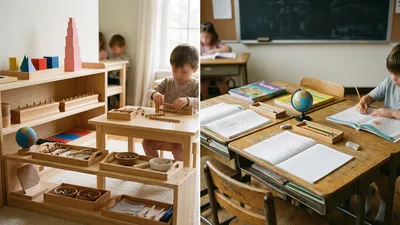
The Montessori method is an educational approach developed by Dr. Maria Montessori in the early 1900s, characterized by self-directed learning in a prepared environment, hands-on materials, mixed-age classrooms, and an adult who guides rather than instructs. It treats children as competent individuals capable of self-direction when given the right tools and environment.
If you are trying to understand what people mean when they say “Montessori,” you have probably noticed that the explanations vary wildly. Some people describe it as “free play with wooden toys.” Others describe it as a strict curriculum. Some say it is for gifted children. Others say it is for struggling ones.
These are not all wrong, but none of them is right by itself. The actual Montessori method is more specific and more interesting than any of them.
This guide is a clear, plain-English definition. We will define the method, explain the key terms, and clarify common misconceptions. If you read only one piece of writing about Montessori, this can be it.
The Core Definition
The Montessori method is an educational approach developed by Dr. Maria Montessori in the early 1900s, characterized by:
- Self-directed learning — children choose their own activities from a curated set of materials
- A prepared environment — physical space designed specifically for child use
- Hands-on materials — concrete objects that teach specific concepts
- Mixed-age classrooms — children grouped in 3-year age spans
- A guide who observes — adults who watch and support rather than lecture
- Respect for the child — children treated as capable, competent individuals
- An uninterrupted work cycle — 3 hours of self-directed activity each morning
Each of these is essential. A program that has some but not others is not fully Montessori. The method works as an integrated system.
What the Method Is Not
Several common misconceptions are worth addressing.
Montessori is not a brand. The word is not trademarked. Any school can call itself Montessori with no required certification. Quality varies dramatically. Authentic programs are typically accredited by AMI or AMS.
Montessori is not a religion. It is a secular educational method. Maria Montessori herself was Catholic and some programs incorporate religious instruction, but the method itself is neutral.
Montessori is not free play. It is highly structured. Children choose from carefully prepared options, not from anything they can imagine.
Montessori is not permissive. Children have clear, firm limits. They do not hit, destroy property, or interrupt others. The freedoms exist within structure.
Montessori is not for gifted children. It was originally developed for children considered “uneducable” and works across the full range of cognitive abilities.
Montessori is not anti-academic. Children typically read, write, and do math at advanced levels compared to traditional school peers.
Key Terms Defined
To understand Montessori, you need vocabulary. Here are the essential terms.
Prepared Environment
The physical space — classroom or home — designed specifically for the developmental needs of the children using it. Includes child-sized furniture, accessible materials on open shelves, real (not pretend) tools, defined work areas, beauty and order. The environment is not a setting for learning; it is itself a teaching instrument.
Work Cycle
The 3-hour uninterrupted block of self-directed activity that anchors a Montessori morning. Children choose their work, change as they wish, and work as long as their interest holds. No bells, no whole-class instruction, no scheduled transitions interrupt the cycle.
Sensitive Periods
Developmental windows during which a child has an internal drive to learn specific skills. The major ones:
- Language: Birth to age 6, with intense windows at specific stages
- Order: Approximately 18 months to 2.5 years
- Movement: Birth to age 4 (with refinement continuing later)
- Small objects: Around 18 months to 3 years
- Refinement of senses: 2-4 years
- Social behavior: 2.5-6 years
- Writing: 3.5-4.5 years (often before reading)
- Reading: 4-5 years
- Mathematics: 4-6 years
Learning during a sensitive period is effortless. Outside the window, the same skill is harder.
Normalized Child
A child who has developed deep concentration, self-discipline, and joyful engagement with meaningful work. This is the natural condition of children given the right environment. The term can confuse English speakers because “normalized” sounds like “made normal.” It actually means “having reached their natural, healthy developmental state.”
Three-Period Lesson
A specific method for teaching vocabulary. Period 1: naming (“This is rough”). Period 2: recognition (“Show me rough”). Period 3: recall (“What is this?”). The three-period lesson is used throughout the curriculum for teaching precise vocabulary.
Control of Error
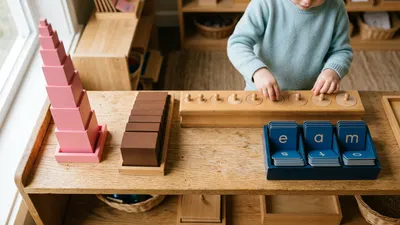
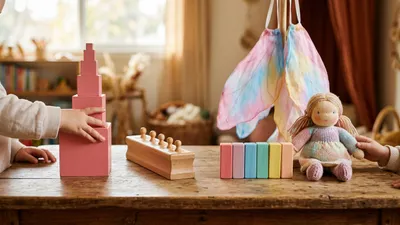
A design principle of Montessori materials: the material itself shows the child when they have made a mistake, without adult intervention. The cylinders will not fit in the wrong holes. The pink tower will look wrong if stacked incorrectly. This builds self-correction and independence.
Follow the Child
A foundational principle: observe what the child is interested in, what they are ready for, what they need more practice with, and respond accordingly. Curriculum sequence is the frame; the child sets the pace.
Practical Life
The Montessori curriculum area that includes everyday activities — pouring, washing, sweeping, food preparation, dressing oneself, plant care. These activities develop concentration, coordination, independence, and care of the environment. They look simple but are foundational to all later work.
Sensorial Materials
Precisely designed objects that isolate a single sensory quality (dimension, color, weight, texture, sound, smell). Examples: pink tower, brown stair, color tablets, smelling bottles. They develop the senses and prepare for later academic work.
Casa dei Bambini
Italian for “Children’s House.” The name of the first Montessori school (Rome, 1907) and the term still used for primary (3-6) Montessori programs in many countries.
Going-Out
A practice in elementary Montessori where children leave the classroom for research trips, interviews with experts, or community-based learning. Builds independence and connects abstract learning to lived reality.
Cosmic Education
The Montessori elementary curriculum frame, presenting the universe and humanity’s place in it as a coherent story. The five “Great Lessons” (origin of the universe, coming of life, coming of human beings, story of communication, story of numbers) anchor all academic work.
The Five Curriculum Areas
A Montessori primary classroom organizes work into five interconnected areas.
Practical Life. Real-world activities that develop concentration, coordination, and care for the environment. Pouring, sweeping, washing dishes, polishing brass, food preparation.
Sensorial. Materials that refine the senses and prepare for academic work. The pink tower, brown stair, color tablets, smelling bottles.
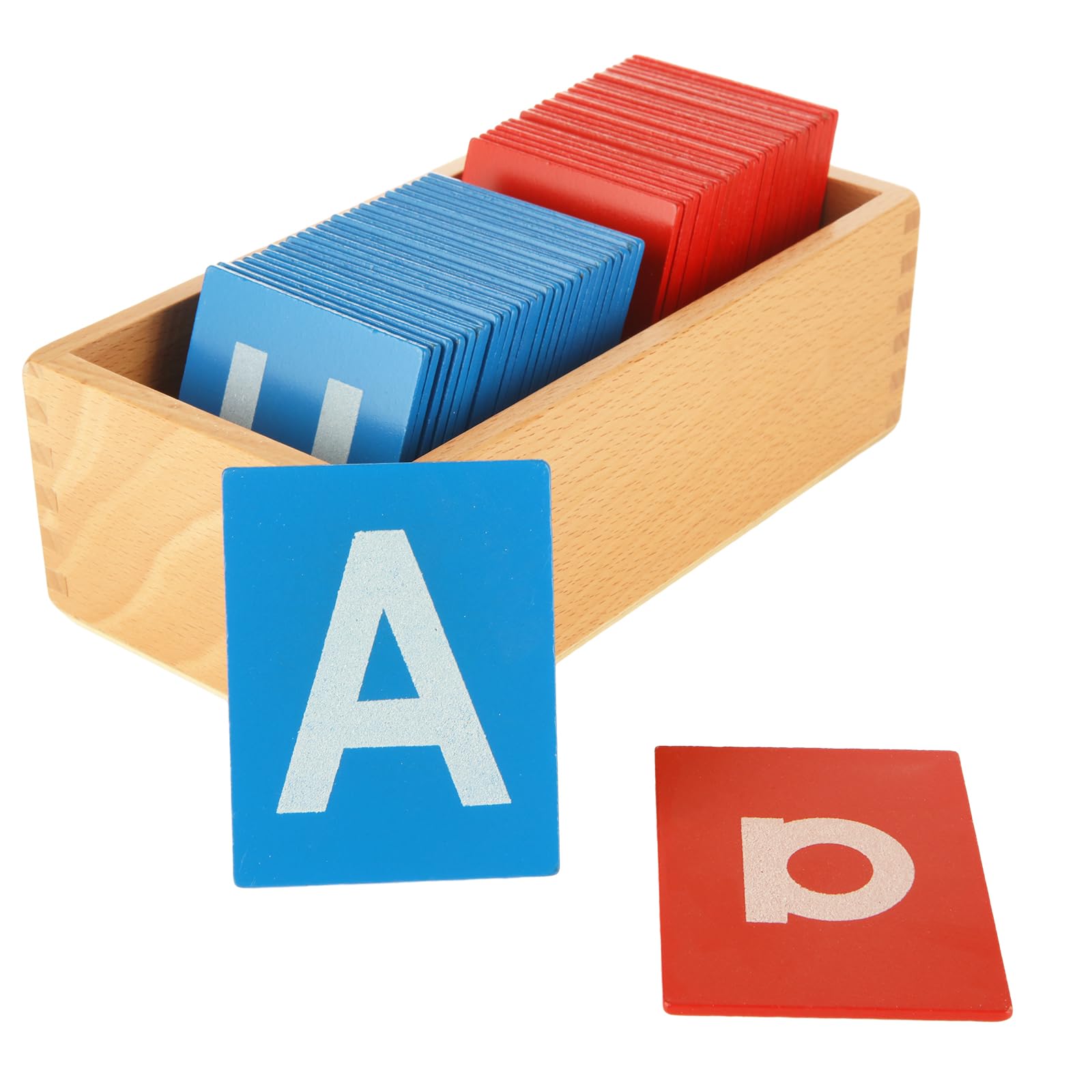
Language. Sandpaper letters, moveable alphabet, beginning reading. Writing typically comes before reading.
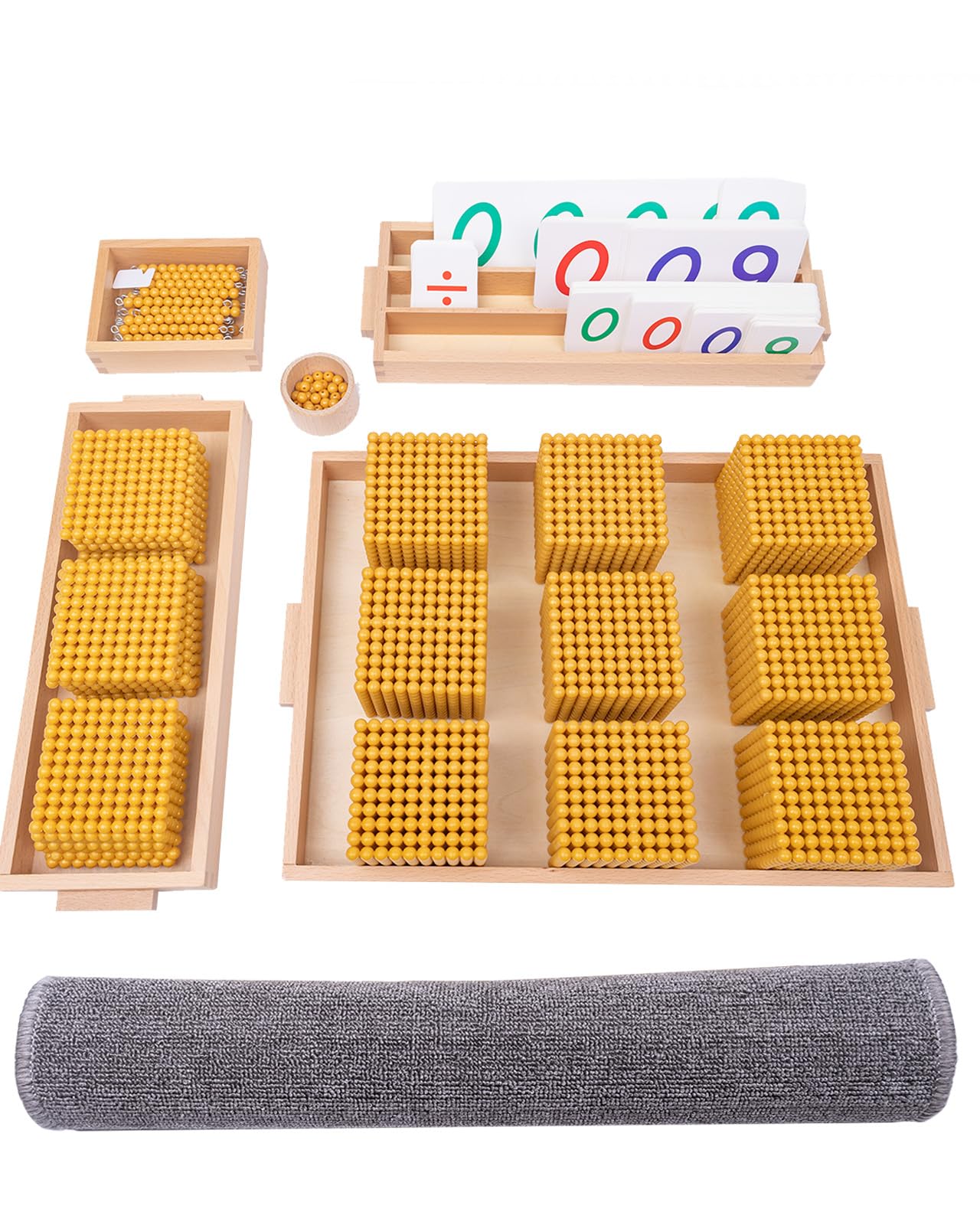
Mathematics. Number rods, sandpaper numbers, golden beads (the decimal system), bead chains, stamp game. Concrete materials build understanding before abstraction.
Cultural. Geography (sandpaper globe, puzzle maps, continent boxes), botany, zoology, history, art, music. Children learn about the world systematically.
The Developmental Stages
Maria Montessori divided childhood into four “planes of development,” each with distinct characteristics and curriculum.
First Plane (Birth-6). Absorbent mind. The child unconsciously absorbs the environment. Curriculum focuses on sensorial refinement, language acquisition, practical life, and early academics.
Second Plane (6-12). Reasoning mind. The child becomes curious about how things work, the natural world, ethics, and social relationships. Curriculum includes “cosmic education” — the great stories of the universe and humanity.
Third Plane (12-18). Social and emotional development. The child grapples with identity, social relationships, and place in the world. Curriculum emphasizes community, work-study, and connection to the natural world.
Fourth Plane (18-24). Maturity. Beyond formal education, but Maria Montessori observed this as a continuation of developmental work into early adulthood.
Authentic vs Nominal Programs
Because the name is not trademarked, programs vary widely in fidelity to the method.
Authentic Montessori programs typically:
- Are accredited by AMI or AMS
- Have AMI- or AMS-trained teachers
- Maintain a 3-hour uninterrupted work cycle
- Use the full set of Montessori materials
- Use mixed-age classrooms (3-year spans)
- Avoid external rewards and punishments
Nominal Montessori programs may:
- Use the name without accreditation
- Have teachers without proper Montessori training
- Break the work cycle with whole-class activities
- Use only some materials
- Use single-age grouping
- Use rewards, sticker charts, time-outs
A program does not need to be perfect to provide some Montessori benefit, but research suggests authentic programs produce significantly stronger outcomes.
How to Tell If a Program Is Authentic
When evaluating a Montessori school:
- Ask about teacher training. AMI or AMS accreditation for teachers is the strongest signal.
- Ask about the work cycle. A real Montessori program has a 2-3 hour uninterrupted morning work cycle. No exceptions.
- Visit and observe. Look for self-directed children, mixed ages, a calm atmosphere, full set of materials on accessible shelves.
- Notice what is absent. Sticker charts, time-out chairs, behavior charts, and cartoon decorations are all signs of compromised authenticity.
- Ask about discipline. Authentic Montessori uses natural consequences and respectful guidance, not punishment.
A Closing Thought
The Montessori method is, at its core, a specific, coherent approach to education built on a century of refinement. It is not vague, not infinitely flexible, and not a marketing identity. It is a set of practices that, when implemented faithfully, produce documented benefits for children.
If you are deciding whether a program is Montessori, the answer is in the specifics — the teacher training, the work cycle, the materials, the philosophy applied consistently. The name on the sign matters less than what happens inside the classroom every day.
When you understand the definition, you can recognize the real thing. And the real thing, the research suggests, is worth recognizing.