Montessori discipline is not punishment-based. It uses prepared environment, clear limits, natural consequences, calm presence, and respectful communication to build internal self-regulation. It is structured, not permissive. The aim is a child who behaves well because they have developed self-control, not because they fear consequences.
A toddler refuses to put on shoes. A preschooler hits a sibling. A 5-year-old has a meltdown over the wrong color cup. These are the moments when the parenting philosophy you thought you had goes out the window.
In traditional discipline, the response is some combination of threat (“if you don’t put on your shoes, no park”), reward (“good listener gets a sticker”), punishment (“that’s a time-out”), or escalation (“I said NOW”). These feel effective in the moment because they often work in the moment. They are also, the research and experience suggest, mostly ineffective in the long run.
Montessori discipline takes a different approach. It does not aim for short-term compliance. It aims for a child who, over years, develops the genuine capacity to regulate themselves, respect others, and handle frustration. This is harder in the short term and far more effective in the long term.
This guide walks through the philosophy and concrete practices. It is not abstract — every section includes what to do when, in real situations.
The Underlying Philosophy
The first thing to understand about Montessori discipline is that the word “discipline” means something different than in common usage.
In conventional usage, “discipline” usually means external control — making a child do (or not do) something through reward, punishment, or pressure. The parent’s behavior is the cause; the child’s behavior is the effect. The goal is compliance.
In Montessori, “discipline” means self-discipline — the child’s developed capacity to direct their own behavior. The parent’s role is not to control the child but to support the development of this capacity. The goal is not compliance but self-regulation.
This is not a semantic difference. It produces fundamentally different parenting decisions.
A traditional approach might use a sticker chart to get a child to put on shoes. This produces short-term compliance but does not build self-regulation. The child puts on shoes because they want the sticker, not because they have internalized the value of doing so.
A Montessori approach prepares an environment where putting on shoes is accessible (low shoe rack, child-sized chair, achievable timing), sets a clear limit (we put on shoes before going outside), and accepts the natural consequence if the child refuses (we are not going outside until shoes are on). Over time, the child develops the habit of putting on shoes and the internal motivation to do so — because going outside is what they want, and shoes are the path.
The first approach gets compliance now. The second builds capability for life.
The Five Tools of Montessori Discipline
There are five tools that do most of the work in Montessori discipline.
1. The Prepared Environment
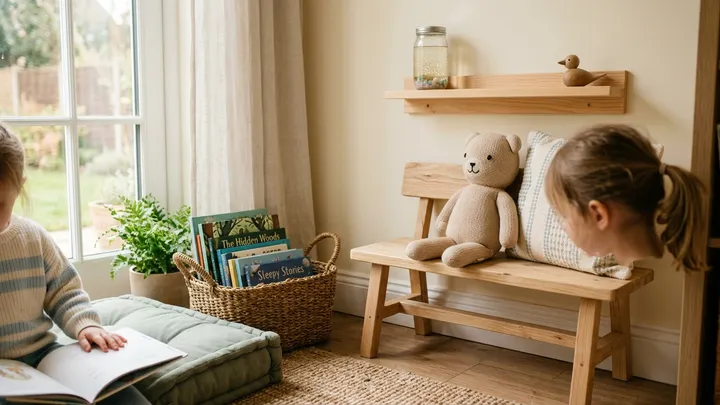
The environment does most of the parenting before the parent has to say a word. A home prepared for the child reduces conflict dramatically because most of what parents would otherwise need to manage is no longer necessary.
If your child can reach what they need (water, snacks, books, toys, clothes), they do not need to demand help constantly. If your child has a clear place for everything, they can put things away. If your child has access to age-appropriate work, they will engage with it rather than seek negative attention.
The first question when discipline keeps coming up: is the environment supporting the behavior I want? If the answer is no, fix the environment before working on the behavior.
2. Clear, Firm Limits
Limits are non-negotiable. They are stated briefly and held consistently. They are not about who is in charge — they are about how the family functions.
Examples of clear limits:
- We do not hurt people or animals
- We do not destroy property
- We put things away when we are done
- We do not interrupt other people’s work
- We wash our hands before meals
- We go to bed at bedtime
These limits are stated as facts, not as requests. They are held without negotiation, even when the child pushes (which they will). The limit is the limit.
Within these limits, the child has wide freedom. They choose what to wear, what to play, who to play with, what to eat from offered options, what to do during free time. The combination of firm limits and real freedom is precise. Children find this both grounding (the structure is stable) and respectful (their choices are real).
3. Natural and Logical Consequences
When a limit is violated, the response is a connected consequence, not an arbitrary punishment.
Natural consequences happen on their own. If a child refuses to wear a coat, they get cold. If they pour their water on the floor, the water is gone. If they hit a friend, the friend may not want to play. The world teaches.
Logical consequences are connected to the behavior. If a child throws their food, the meal is over. If a child uses a marker on the wall, they help clean it. If a child draws on a book, that book is put away until they can use it appropriately.
The key is connection. The consequence must relate to the behavior. Arbitrary consequences (“you can’t have screen time tonight because you hit your brother”) have no logical relationship to the behavior and feel like punishment rather than learning.
When you cannot think of a natural or logical consequence, the right move is usually no consequence at all — just a clear statement of the limit and time for the child to calm down. Inventing a punishment because you feel you should do something is usually a mistake.
4. Calm Presence
When a child is in distress, the most powerful thing a parent can do is stay calm.
This is the hardest single skill in Montessori discipline. A child screaming, hitting, refusing, melting down — these activate every alarm in the parent’s nervous system. The instinct is to escalate, control, fix, or end the situation as quickly as possible.
The Montessori response is to lower your voice, slow your breathing, and physically position yourself near the child without forcing interaction. You become the regulated nervous system the child does not yet have access to. They will eventually borrow your calm.
This does not mean you say nothing. You might say:
- “I can see you are upset.”
- “I am here.”
- “When you are ready, we can talk.”
But mostly you are present. You are not performing parenting. You are being a calm adult in a room with a dysregulated child.
When you cannot stay calm, the right move is often to step away briefly (handing off to a partner if possible) and return when you are regulated. Children learn from this, too: that overwhelm is real, that adults take responsibility for their own state, that breaks help.
5. Reflection and Repair
After the storm, there is space for connection and learning.
Once the child is calm, you can:
- Acknowledge what happened (“That was a big upset”)
- Connect the feeling to the behavior (“You felt frustrated and you hit”)
- Offer an alternative for next time (“Next time, you can ask for help or hit this pillow”)
- Problem-solve together (“What can we do so this does not happen again?”)
This is not a lecture. It is a brief conversation, in the language the child can understand. The reflection is more important than any rule you might impose. It builds the child’s understanding of their own behavior and emotional life.
Repair — the rebuilding of connection after rupture — is essential. Children need to know that conflict does not break the relationship. Many tantrums end with a hug and a return to whatever was happening before. This is not a reward for the tantrum; it is the natural conclusion of conflict in a healthy relationship.
Common Situations and How to Handle Them
The Toddler Tantrum
Setting: Public place, child wants something you have said no to.
The toddler tantrum is not bad behavior. It is a developing nervous system overwhelmed by feelings it does not yet know how to handle. The brain regions responsible for emotional regulation literally do not finish developing until the mid-20s. A 2-year-old in full meltdown is doing what their brain can do.
What works:
- Get to the child’s level
- Stay calm and quiet
- Acknowledge briefly (“You wanted that. I said no. That is hard.”)
- Hold the limit (“We are still leaving the store.”)
- Be patient — the tantrum will end on its own timeline
- Do not negotiate the original limit because of the tantrum (this teaches that big feelings get rewards)
What does not work:
- Reasoning with a child whose rational brain is offline
- Threatening (“If you don’t stop, no ice cream”)
- Bribing (“If you stop, I’ll give you a cookie”)
- Becoming angry yourself
- Long explanations
- Public shaming
After a tantrum, brief reconnection is usually enough. You do not need to discuss it at length. Move on with the day.
Sibling Conflict
Setting: Two children fighting over a toy, hitting, or being mean.
Sibling conflict is some of the most important learning that happens in childhood. Children learn social negotiation, conflict resolution, empathy, and self-advocacy in these moments. Parents who intervene too quickly cut this learning short.
What works:
- Wait briefly before intervening. Sometimes children sort it out.
- Intervene immediately if safety is involved (hitting, biting, choking).
- Move physically between the children. State the limit (“I will not let you hit”).
- Acknowledge both children’s feelings without taking sides (“You wanted the truck. You had the truck first.”)
- Help them generate solutions, not impose one (“How could we work this out?”)
- For chronic conflict, look at the environment. Is there enough of what they want? Enough space? Enough adult attention?
What does not work:
- Always intervening to “fairness”
- Always taking the side of the younger or smaller child
- Sending both children to separate rooms as punishment
- Demanding apologies that are clearly performative
- Lecturing about how siblings should treat each other
The Refusal
Setting: Child will not do something necessary (get dressed, eat, get in the car).
Refusals are often power struggles, which means the parent is part of the dynamic. The first move is often to step back and reduce the power dynamic.
What works:
- Offer two acceptable choices (“Red shirt or blue shirt?”)
- Make the desired behavior the path to something the child wants (“As soon as shoes are on, we can go to the park”)
- Allow natural consequences if safe (“Okay, no shoes. The grass might be wet on your feet.”)
- Move on. Avoid the standoff. Many refusals dissolve when you stop pressing.
What does not work:
- Yelling
- Repeating the demand louder
- Threatening
- Bribing with food or toys
- Trying to physically force compliance
The Hit, Bite, or Scratch
Setting: Aggression at the toddler or preschool age.
Aggression at young ages is almost always about overwhelm — too much stimulation, too little vocabulary, too much frustration. It is also one of the few situations where immediate physical intervention is appropriate.
What works:
- Physically prevent the aggression (“I will not let you hit”)
- Move close to both children
- State the limit firmly: “Hitting hurts. We do not hit.”
- Acknowledge the feeling: “You are angry.”
- Offer an alternative: “You can hit this pillow. You can stomp your feet. You can use words.”
- Do not over-talk. The fewer words, the better.
- Repair afterward, with the aggressive child caring for the hurt one in some way (bringing ice, helping, sitting with them).
What does not work:
- Hitting back to “teach”
- Long lectures during the moment
- Forced apologies
- Shaming (“You are being mean”)
Aggression typically decreases dramatically over months when handled this way consistently.
What to Do When Nothing Is Working
Sometimes, despite your best efforts, behavior is escalating. The Montessori approach when this happens is not to try harder with the same tools but to step back and ask different questions.
Is the environment supporting the behavior I want? A child who is overstimulated, under-stimulated, or surrounded by chaos cannot be expected to behave well. Fix the environment first.
Is the child getting enough basic needs met? Sleep, food, movement, outdoor time, parent attention. Behavior often deteriorates when any of these are deficient.
Am I projecting an expectation that does not match my child’s age? A 2-year-old cannot regulate the way a 5-year-old can. A 5-year-old cannot regulate the way a 10-year-old can. Calibrate.
Am I bringing my own dysregulation into the moment? Children mirror parents. If you are stressed, anxious, or angry, your child feels it. The most powerful intervention is often work on yourself.
Is there something the behavior is trying to tell me? Behavior is communication. Persistent challenging behavior usually points to an unmet need — for connection, autonomy, sensory input, or rest. What is the need underneath?
When you address the root, the behavior often shifts without direct intervention.
A Final Thought
Montessori discipline is not a quick fix. It is a long, patient practice that produces results over months and years rather than days and weeks.
What you give up: the appearance of immediate control. The illusion that punishment produces good behavior. The comfort of a chart full of stickers.
What you gain: a child who, over time, develops the genuine capacity to regulate themselves. A child who handles frustration with growing skill. A child who respects others not because they fear consequences but because they have internalized respect. A child who, ultimately, becomes an adult who does not need a parent to make good choices.
That is what the discipline produces. It takes years. It is worth them.
Start with one situation. The next time a tantrum comes, try staying calm and present. The next time a refusal happens, try offering a choice. The next time a hit happens, try physical intervention plus an acceptable alternative. Each successful moment compounds. Each calm response builds the relationship.
After a year of practice, you will look back and notice that you have stopped raising your voice, that bedtime is no longer a battle, that your child handles frustration in a way that surprises you. The change will have happened, slowly, while you were not looking.
That is the method. It works.