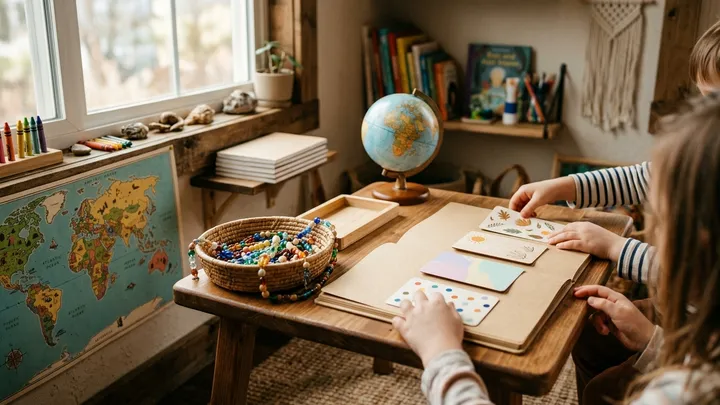
Montessori homeschooling follows the same developmental stages as Montessori schools: infant/toddler, primary (3-6), and elementary (6-12). Each stage has a coherent curriculum across practical life, sensorial, language, math, and cultural subjects. This guide maps the entire path with concrete materials, weekly rhythms, and milestones to look for at each age.
The first thing to understand about Montessori homeschooling is that it is not a curriculum you buy and follow. It is an approach you live, one that takes the same principles used in Montessori schools and adapts them for the rhythms of a family home.
That distinction matters because most homeschool advertising sells curricula — scripted lessons, printable worksheets, weekly schedules. Montessori is structured but not scripted. The shelves are prepared with intention, the materials are sequenced, the child is observed carefully, and lessons are given when the child is ready. The day has a rhythm, not a schedule.
This guide is a roadmap for parents who want to do Montessori at home, year by year, with concrete materials, sequences, and milestones to anchor each stage. It is not exhaustive — entire books exist for each stage — but it is enough to start, and enough to know where you are going.
The Three Big Stages
Montessori divides childhood into three developmental planes, each of which has its own curriculum and its own form of work.
Infant and Toddler (Birth to 3). The child is absorbing the world directly. The work is sensorimotor: movement, language acquisition, self-care, and developing the basic vocabulary of human existence.
Primary (3 to 6). The child is consolidating and refining. Sensorial materials sharpen perception. Practical life develops concentration. Language and math emerge from the materials. This is the most famous and most material-heavy Montessori stage.
Elementary (6 to 12). The child becomes a thinker, researcher, and project-builder. The “Great Lessons” frame the universe. Children move from concrete materials to abstract thinking. Going-out (independent research trips) becomes part of the curriculum.
Each stage has different demands on the home, different materials, and different daily rhythms. Here is each in detail.
Birth to 3: The Foundation
The work of this stage is laying the foundation for everything that follows. Movement, language, concentration habits, self-care, and the trust relationship between child and parent.
Daily Rhythm (Infant to 18 Months)
There is no formal “school” yet. The day is mostly about responsive caregiving in a prepared environment.
- Morning: Wake naturally, slow morning routine (diaper, dress, breakfast), floor time on a movement mat with mobiles or low shelf items, outdoor walk
- Mid-morning: Nap
- Midday: Lunch, slow practical-life time (child participates in age-appropriate ways)
- Afternoon: Floor time, outdoor time, possibly second nap
- Evening: Family meal, calm wind-down, story time, bed
Daily Rhythm (18 Months to 3)
Slightly more structure, still very natural.
- Morning: Wake, breakfast (child participates: setting out their own dish, pouring water), 60-90 minute work cycle with prepared shelves
- Mid-morning: Outdoor time (1-2 hours minimum)
- Midday: Lunch (child helps prepare and clean up), nap
- Afternoon: Quieter activities, art, reading, a short walk
- Evening: Family routines, story time, bed
Materials and Activities
Movement. Floor mattress for sleep, open floor for movement, a Pikler triangle or low climbing arch from around 8-10 months, push toy for early walking, climbing structures graded by age.
Language. Reading aloud daily from board books, then longer picture books. Naming objects, narrating routines, singing songs, having real conversations with the child. Avoid baby talk.
Sensorial. Real objects with different textures and weights. Treasure baskets with natural items (wooden bowl, fabric, brush, smooth stones — supervised). Music boxes, simple instruments. Outdoor sensory exposure (mud, sand, leaves, water).
Practical life. From the moment a child can grip, they participate. Holding a sponge, wiping a small spill, putting socks in a basket, helping rinse vegetables. This is not pretend — it is real work scaled down.
Self-care. Low hooks for their coat from about 18 months. A child-sized cup for water. A small chair to sit on while putting on shoes. Mirror at child height for hair brushing.
Milestones to Watch For
- Sitting up, crawling, cruising, walking (6-18 months)
- First words (10-18 months), explosive vocabulary growth (18-30 months)
- Beginning to dress themselves (24-36 months)
- 5-minute episodes of independent concentration (around 2 years)
- Asking “what is this?” repeatedly (sensitive period for language)
- Wanting to do things “by myself”
The child is not learning academic content yet. They are learning how to learn, how to do, how to be in a body that is rapidly gaining capability.
3 to 6: The Primary Years
This is the most famous Montessori stage and the one most homeschooling families focus on. It is also the most demanding in terms of materials and parent preparation.
Daily Rhythm
The 3-hour work cycle is the heart of primary Montessori. This is non-negotiable for the method to work as designed.
- 8:00 — Wake, slow morning routine, breakfast together
- 9:00-12:00 — 3-hour uninterrupted work cycle (child chooses work from shelves, parent gives short individual lessons, observation)
- 12:00 — Lunch, child participates in preparation and cleanup
- 1:00 — Outdoor time, rest, or quiet activity
- 2:30 — Afternoon block: art, music, practical life, a special project, or a going-out
- 4:30 — Free play, family time
- 6:00 — Family dinner
- 7:30 — Story time, bath, bed
The 3-hour morning cycle is the load-bearing structure. Children settle into deep concentration when given continuous, uninterrupted time. The first hour may look unproductive (wandering, brief activities). The second and third hours are where the real work happens.
The Five Curriculum Areas
Practical Life. Pouring, transferring, washing, polishing, cutting, sewing, table-setting, plant care, animal care. These activities develop concentration, order, coordination, and independence. They look simple but are foundational. Two to three hours per week of practical life is appropriate.
Sensorial. Materials that refine the senses. Pink tower (sight, dimension), brown stair (sight, width), red rods (length), color tablets (color), smelling bottles (smell), thermic tablets (temperature). These materials prepare the senses for the more abstract work to come in math and language.
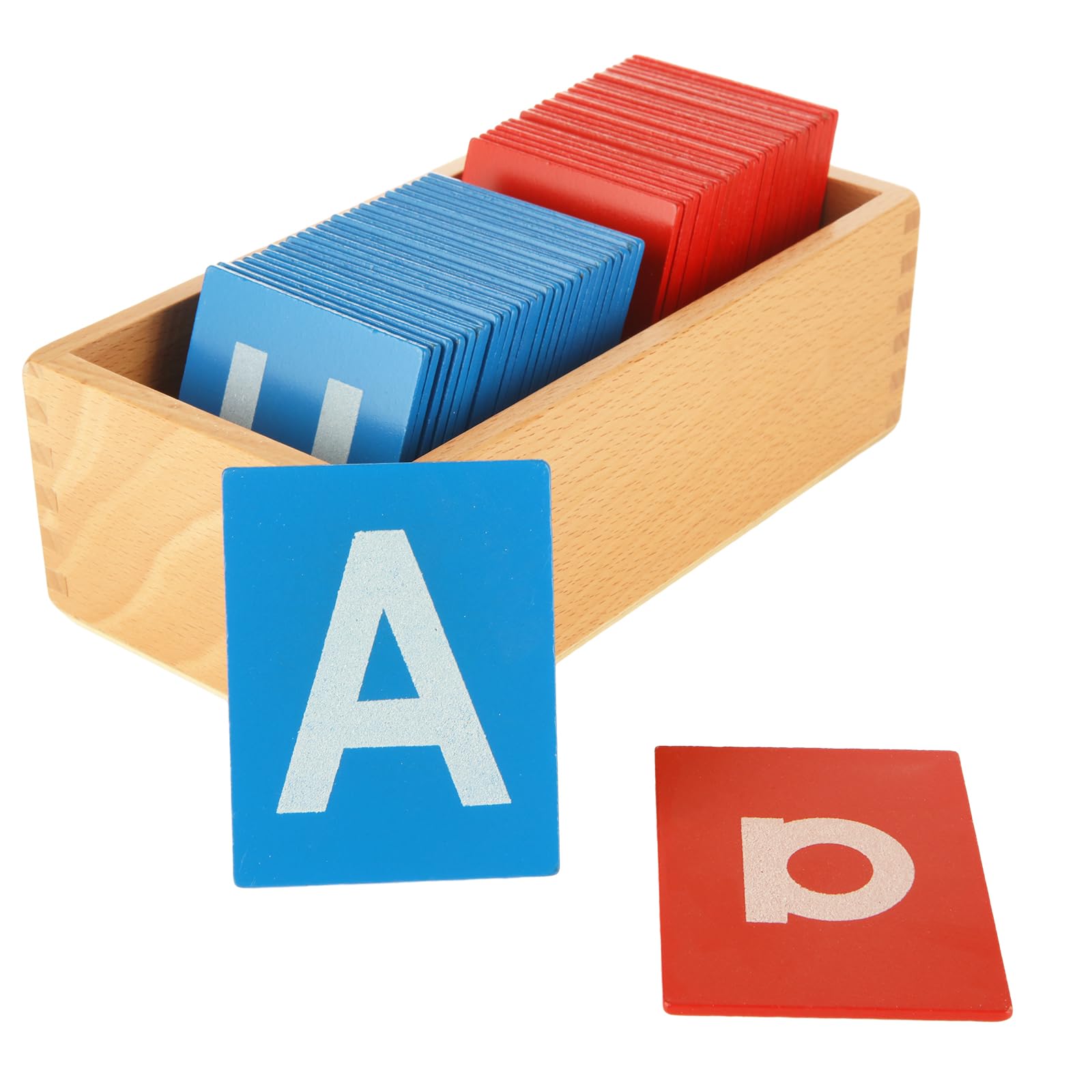
Language. Sandpaper letters (3.5-4.5 years), moveable alphabet (4-5 years), beginning reading from phonetic words. Writing typically comes before reading in Montessori — children write before they decode. Reading often emerges between 4 and 5.5.
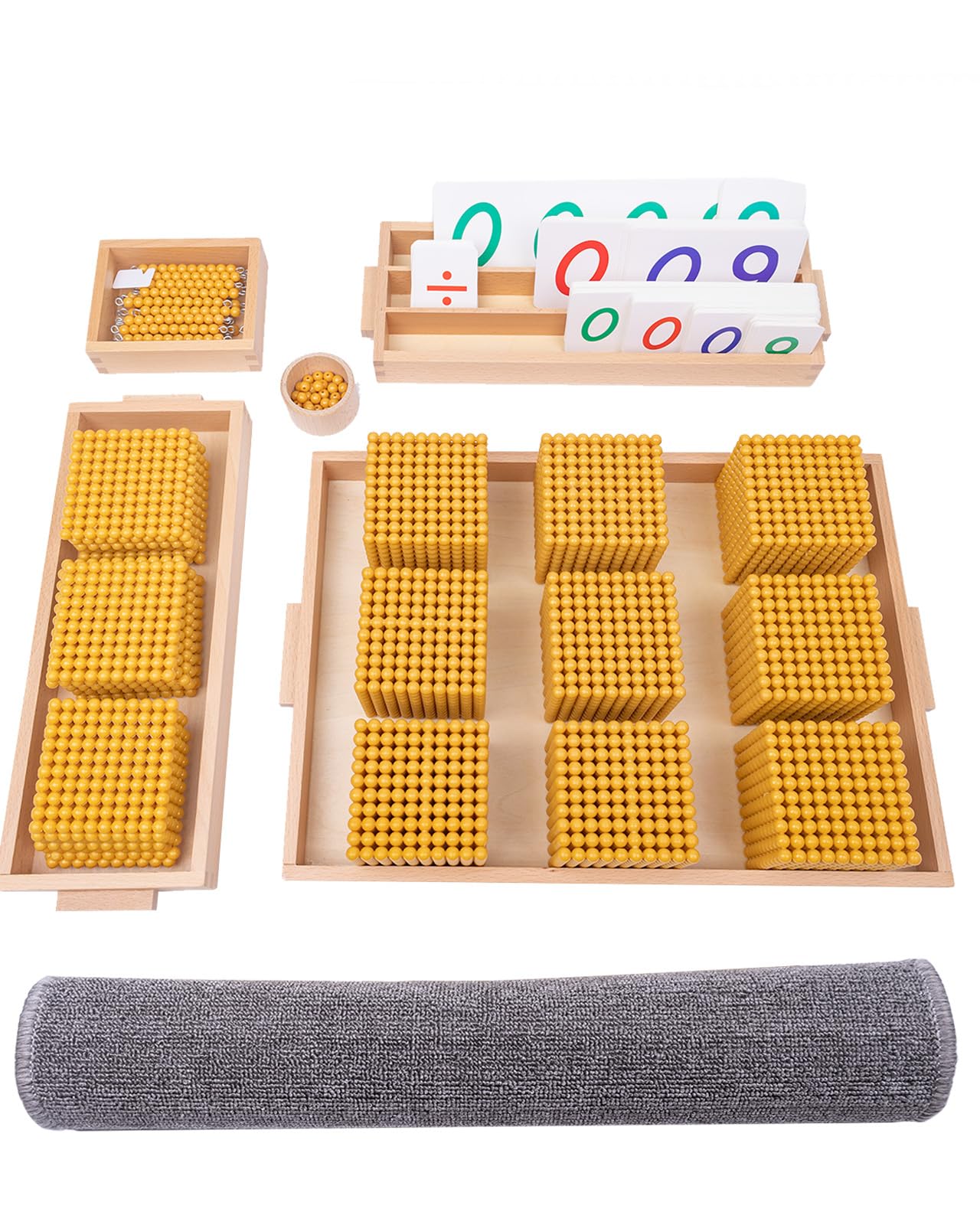
Math. Number rods, sandpaper numbers, spindle box, cards and counters, golden beads (the decimal system), bead chains, multiplication board, division. The materials make abstract math concrete. Most primary children master operations to 1000+ before age 6.
Cultural. Geography (sandpaper globe, puzzle maps, continent boxes), botany, zoology, history (the calendar, the seasons), art and music. Children learn about the world systematically, with hands-on materials.
Essential Primary Materials Kit ($500-800)
The minimum kit to do primary Montessori well:
- Pink tower and brown stair (~$80)
- Sandpaper letters (~$60)
- Moveable alphabet (~$80)
- Sandpaper numbers (~$30)
- Number rods (~$40)
- Golden beads introductory set (~$150)
- Continent puzzle map (~$50)
- Practical life trays and tools (~$80)
- Botany/zoology cards (~$30)
- Sensorial materials (color tablets, geometric solids, smelling bottles) (~$120)
Add as the child progresses. Many full sets exist for $3,000-5,000 if you want everything at once.
Milestones
- 3 years: Beginning practical life, sensorial introduction, sandpaper letters introduction
- 4 years: Reading first words, writing letters and numbers, beginning math materials
- 5 years: Fluent reading, basic operations with golden beads, geography puzzles
- 6 years: Reading chapter books, four operations to 1000+, cultural fluency in basics
6 to 12: The Elementary Years
The shift from primary to elementary is dramatic. The child is now a thinker, a researcher, a social being interested in big questions. The curriculum reflects this.
Daily Rhythm
The work cycle expands to 3.5-4 hours, often broken into morning and early afternoon blocks. Projects span days or weeks.
- 8:00 — Wake, morning routine, breakfast
- 8:30-12:00 — Morning work cycle
- 12:00 — Lunch and outdoor break
- 1:00-3:00 — Afternoon work cycle (often projects, going-out, research)
- 3:00 — Free time, hobbies, sports, social activities
- 6:00 — Family dinner
- 7:30 — Reading, conversation, bed
The Five Great Lessons
Elementary Montessori is structured around five “Great Lessons” — dramatic, story-based introductions that frame the entire universe and serve as anchors for all academic work.
1. The Coming of the Universe and the Earth. Astronomy, geology, chemistry, physics.
2. The Coming of Life. Biology, evolution, the timeline of life on Earth.
3. The Coming of Human Beings. Anthropology, history of civilization, the development of human cultures.
4. The Story of Communication and Writing. Language history, alphabets, written communication.
5. The Story of Numbers. Mathematical history, the development of counting systems and number theory.
Each Great Lesson opens a year-long (or longer) inquiry. The child returns to the materials and themes again and again, going deeper each time. Curriculum in math, language, science, history, and culture all connect back to these stories.
Going-Out
Children in elementary Montessori practice “going-out” — planned trips outside the home or school to do research, interview experts, gather information, or extend a project. A child studying birds might visit an ornithologist. A child interested in bridges might tour an architect’s office. Going-out builds real-world research skills and connects abstract learning to lived reality.
For homeschoolers, going-out is one of the great advantages. Time flexibility makes it easy.
Materials
Materials become less specialized at this stage. Books, research tools, art supplies, microscopes, telescopes, lab equipment, real maps and atlases, foreign language resources. The shift is from concrete manipulatives to written and abstract work.
Many homeschooling families combine elementary Montessori with literature-rich approaches (Charlotte Mason, classical) for the language arts, or with specific math curricula (Beast Academy, Singapore Math) for additional rigor.
Milestones
- 6-7: Fluent reading, writing complete sentences, four operations to 10,000+, basic research skills
- 8-9: Long-form writing, geometry, fractions and decimals, basic science concepts
- 10-11: Independent research projects, algebra readiness, complex writing, foreign language emerging
- 12: Ready for adolescent program or high school, with strong independent work habits
Setting Up Your Home
You do not need a dedicated room, but you do need a dedicated space.
Shelves: 1-3 low open shelves where materials live consistently. The most important furniture in the home.
Work surfaces: A floor space (rug or mat) for materials that need to spread out, and a small table for table work.
Storage: Behind the scenes, baskets or bins for materials that are rotated off the shelf.
Wall space: A simple bulletin board for the child’s work, a low map, a few framed prints.
Quiet zone: Some separation from family noise. A bedroom, a basement corner, a converted dining room.
Reading nook: A cushion, a sheepskin, a small chair with a basket of books.
Most homeschool spaces evolve over the years. Start simple. Add as you go.
A Realistic Weekly Plan (Primary Age)
Monday morning: Practical life focus, language work, outside time Tuesday morning: Math focus, sensorial, reading aloud Wednesday morning: Going-out (library, museum, nature walk) Thursday morning: Language work, art, music Friday morning: Catch-up, projects, deep play
Afternoons: Outdoor time, social activities, classes, hobbies, family time
Weekends: Family life, no formal work
This is just a starting frame. Children’s interests vary; weeks vary. The 3-hour work cycle every weekday is the discipline that holds everything together.
Common Pitfalls
Trying to do too much too soon. Slow down. The 3-year-old is not behind.
Over-buying materials. Start with the essentials. Add over years.
Adding too many activities. Less is more. Children rotate through fewer materials with greater depth.
Imposing pace. The child’s pace is the right pace. If they want to repeat a material 50 times, that is the work.
Skipping observation. Without observation, you do not know what the child is ready for. Sit and watch for an hour a week minimum.
Adding traditional school habits. No worksheets, no grades, no required reading. The method is fundamentally different.
A Closing Thought
Montessori homeschooling is a long, patient practice. You will not see results in a month, perhaps not even in a year. The work is slow, cumulative, and largely invisible to the outside world.
But after several years, the results are striking. Children who can sit and read for an hour without prompting. Children who plan and execute multi-week projects. Children who care for animals, cook real meals, write thoughtfully, and engage with adults as small humans rather than as “kids.”
This is what the method produces. It is not faster than school. It is deeper. And for families who choose this path, the depth is the point.